
Common questions
Cutting Board FAQ
This Cutting Board FAQ answers the questions I hear most about handmade hardwood boards, custom orders, local pickup and care. If yours isn’t here, ask me directly.
Cutting Board FAQ: wood, materials and food safety
What does “Koshur Chaan” mean?
It means “Kashmiri carpenter” in Kashmiri. The studio is named for Maam Kol, a carpenter in my family. Read the story behind the Koshur Chaan name →
Why choose a hardwood cutting board over plastic?
Hardwood is gentler on knife edges, sands smooth again when it gets scratched, and lasts for decades with simple care. Research comparing used wooden and plastic boards found that clean, well-kept wooden boards are no less sanitary than plastic. Read the 1994 Ak, Cliver and Kaspar study on wood and plastic cutting boards
What is the best wood for a cutting board?
Walnut, hard maple and cherry are all excellent. Maple is the hardest and most durable. Walnut is slightly softer, easy on knives and rich in color. Cherry deepens to a warm red-brown over time. The best wood is the one that suits your kitchen and the way you cook.
What woods do you use for your cutting boards?
Black walnut, hard maple and cherry. For custom orders, I sometimes work with other domestic hardwoods.
Do you make end-grain boards?
No. I build edge-grain cutting boards, which are stable, durable and easy to care for. Custom work focuses on size, wood combination, edges, juice grooves, handles and feet.
Can you engrave a board or add a logo?
No, I don’t offer engraving. Each board’s character comes from the grain of the wood itself.
Are your cutting boards food safe?
Yes. Every board is finished with food-grade mineral oil and a beeswax board butter. I never use varnish, lacquer or polyurethane.
What makes a handmade cutting board different from a store-bought one?
A handmade board is built to a standard, not a price: hand-picked lumber, food-safe glue, hand sanding through 220 grit, and several coats of oil. You’ll feel the difference in its weight and surface, and see it in how long it lasts.
Ordering custom cutting boards, pickup and shipping
How much does a handmade cutting board cost?
Boards start at $50. Price depends on wood species, size and design details. You pay nothing until you approve a quote.
How do I place a custom order?
Describe what you’d like on the custom board form. I’ll reply within one business day with a quote, a timeline and any questions. Start your custom cutting board request →
How long does a custom order take?
Usually two to four weeks after you approve the details, depending on size, wood and shop schedule. If you have a date in mind, mention it when you order.
Do you offer local pickup?
Yes. Pickup is by appointment at my studio in Johns Creek, Georgia. You can see your board in person and skip the shipping cost.
Do you ship cutting boards?
Yes, anywhere in the U.S. Every board ships securely packed with care instructions.
Where can I see your boards in person?
At my Johns Creek studio, by appointment. Book a visit to the Johns Creek studio →
Care, cleaning and oiling
How do I clean a wooden cutting board?
Hand-wash with warm water and mild soap, towel-dry, and stand it on its edge to air-dry. Never soak it or put it in the dishwasher. Read the full cutting board care guide →
How often should I oil a cutting board?
About once a month. Oil a new board three or four times in its first month. Any time water stops beading on the surface, it’s ready for more.
Can I use both sides?
Yes. Using both sides spreads out the wear. Oil both faces and all four edges.
Will my board change color?
Yes. Cherry darkens noticeably, from pale to a rich red-brown. Walnut mellows slightly. Every wood develops a soft patina with use.
Can a worn board be refinished?
Yes, and that’s one of wood’s biggest advantages. A light sanding at 220 grit removes surface marks. For deeper wear, start at 120 grit. Re-oil afterward and it looks nearly new.
How long does a hardwood cutting board last?
For decades, with hand washing, monthly oiling and an occasional light sanding.
Turkish scarves and gift pairings
Where do your scarves come from?
I choose each one in person in Türkiye.
Are they available year-round?
Stock is small and changes with every trip, so ask me what’s available now. Ask which Turkish scarves are in stock →
Can I pair a scarf with a cutting board as a gift?
Yes. Tell me the occasion, and I’ll suggest a board and scarf that go well together.
Using this FAQ
Getting the most from this Cutting Board FAQ
Before you order
Read the materials section of this Cutting Board FAQ first. It explains how walnut, maple and cherry differ, so your quote request can be specific.
After it arrives
Keep this Cutting Board FAQ bookmarked for the first month. The care answers cover oiling a new board three or four times and drying it on its edge.
When you give one
Share this Cutting Board FAQ with the person receiving your gift. It answers the care questions they will have, in plain language. New questions join this Cutting Board FAQ when they come up often enough.
From the shop
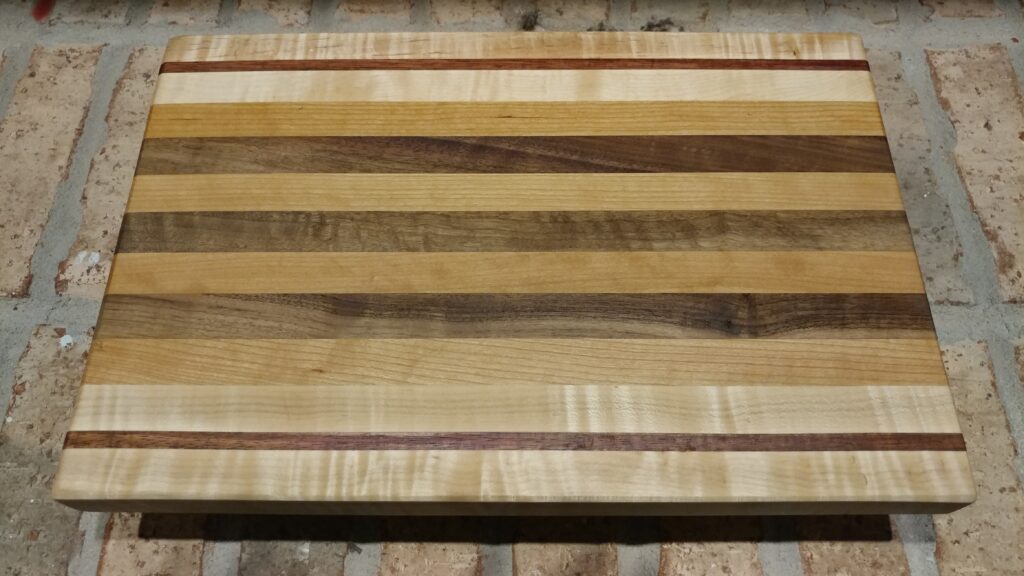
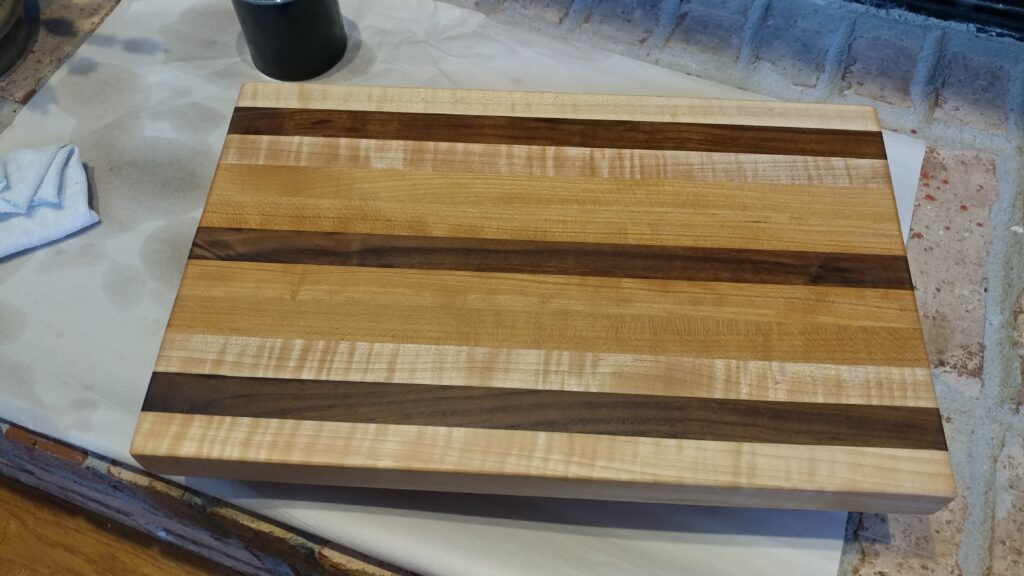
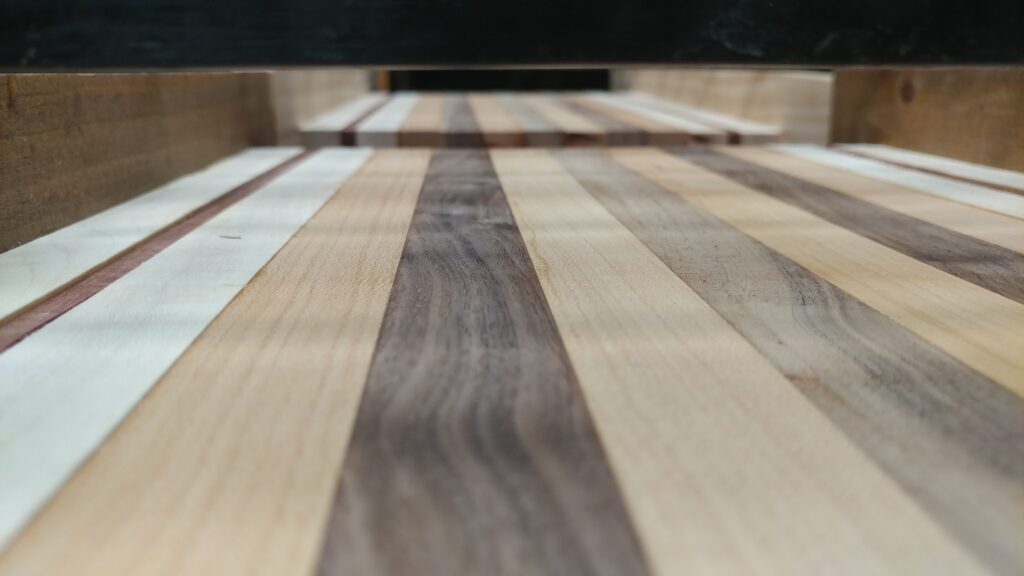
Boards behind the Cutting Board FAQ
Still have a cutting board question?
Ask me about anything this Cutting Board FAQ doesn’t cover, and I’ll be happy to help.
Didn’t find your answer here? Browse the handcrafted cutting boards, read the cutting board care guide, or schedule a studio visit by appointment. Every board is made by hand, one at a time, here in Georgia.