
Board care guide
How to Care for a Wood Cutting Board
The essentials
Three rules that protect every board
Board care comes down to three rules. Most board damage comes from breaking one of them.
Never the dishwasher
Heat and steam make the wood swell unevenly. That splits glue joints, warps the board and cracks it along the grain. Hand-wash every time.
Dry it on its edge
Towel-dry right after washing, then stand the board on its edge or in a rack so air reaches both faces. A board left flat and wet dries unevenly and can cup.
Oil it monthly
Food-grade mineral oil keeps the wood from drying out and cracking. Oil a new board three to four times in its first month, then about once a month after that.
Set the board on a damp towel or a thin non-slip mat while you cut. It won’t slide, and it’s safer to use.
How wood behaves
Why a wooden board needs care
Wood keeps moving after it’s cut. It soaks up moisture when the air is humid and gives it back when the air is dry. That isn’t a flaw; it’s how wood works, and good care keeps the movement slow and even. That’s why good habits matter more than any single product.
When one side gets much wetter than the other (from soaking, or from drying flat on a wet counter) the board swells unevenly and can warp. When it gets too dry, as it often does in winter with the heat on, the surface roughens and can crack.
Mineral oil soaks into the wood rather than sitting on top like varnish. A well-oiled board takes on water more slowly, so it reacts to changes in humidity more gently.
Step by step
How to care for a wood cutting board, step by step
Daily cleaning
After each use, wash the board with warm water and a little mild dish soap. Use a soft brush or sponge, never steel wool or a scouring pad.
- Use warm, not hot, water
- Rinse off all the soap
- Towel-dry right away
- Stand it on its edge to finish drying
- Never soak it or leave it in a sink of water
After raw meat, wash promptly with warm, soapy water and dry it completely. Many cooks keep one board for raw meat and another for everything else.
Monthly oiling
Oil all six sides: top, bottom and all four edges. Oiling only the top is one of the most common causes of warping.
- Use food-grade mineral oil or board butter, never cooking oil
- Apply a generous coat with a clean, lint-free cloth
- Let it soak in for at least 30 minutes; overnight is best
- Wipe off whatever hasn’t soaked in
- Repeat about once a month, and more often in winter
Removing odors
Garlic, onion and fish can leave a smell behind. Salt and lemon take it out without drying the wood.
- Sprinkle coarse salt over the surface.
- Rub it in with the cut side of half a lemon.
- Leave it for three to five minutes.
- Rinse with warm water and dry right away.
A quick wipe with diluted white vinegar (1 part vinegar to 4 parts water) also works.
Light sanding
After months of use, a board may feel rough or show fine knife marks. A light sanding brings back a smooth surface.
- For light roughness, sand with 220-grit only
- For heavier wear, start at 120, then 180, then 220
- Always sand along the grain, never across it
- Wipe off the dust with a damp cloth and let the board dry
- Oil it two or three times over the next two days
Full refinishing
A board with deep knife marks or stains can usually be brought back to nearly new.
- Sand through 80, 120, 180 and 220 grit.
- Remove the dust after each grit.
- Let the bare wood dry for at least an hour.
- Apply four to five coats of mineral oil over two days.
- Finish with a coat of board butter and let it sit overnight.
Expect about an hour of sanding and two days of oiling. If you’d rather not do it yourself, contact me.
Mistakes to avoid
- Dishwasher: damages a board every time
- Soaking: even a short soak lets water in unevenly
- Cooking oils: olive, vegetable and coconut oil can go rancid in the wood
- Oiling only the top: leads to warping; oil all six sides
- Storing in direct sun or near the stove: dries and cracks the surface
- Drying flat on a wet counter: traps moisture underneath
Care at a glance
Care in common situations
New boards
In its first month, oil it three or four times, letting each coat soak in. After that, about once a month is enough.
After raw meat
Wash it promptly with warm, soapy water and dry it completely. Many cooks keep a separate board for meat.
Winter in Georgia
When the heat is on, oil it every two to three weeks, and keep it away from vents and the stove.
Lingering odors
If it smells of garlic or onion, rub in coarse salt with half a lemon, wait a few minutes, then rinse and dry.
Serving boards
A board used mostly for serving gets the same routine. Wash, dry on edge, and oil whenever water stops beading.
Storage and travel
Packing a board away or taking it on a trip? Oil it first, keep it dry and on edge, and oil it again when it comes back out.
Through the year
Seasonal care in Georgia
Winter
Indoor heat dries the air, and boards dry out faster. Oil every two to three weeks, and keep boards away from heating vents and the stove.
Summer
Monthly oiling is usually enough. Keep boards out of direct sunlight, which dries and fades the surface.
Travel
A board taken to a lake house or the coast meets different humidity. Oil it before the trip and again when you arrive.
In the shop
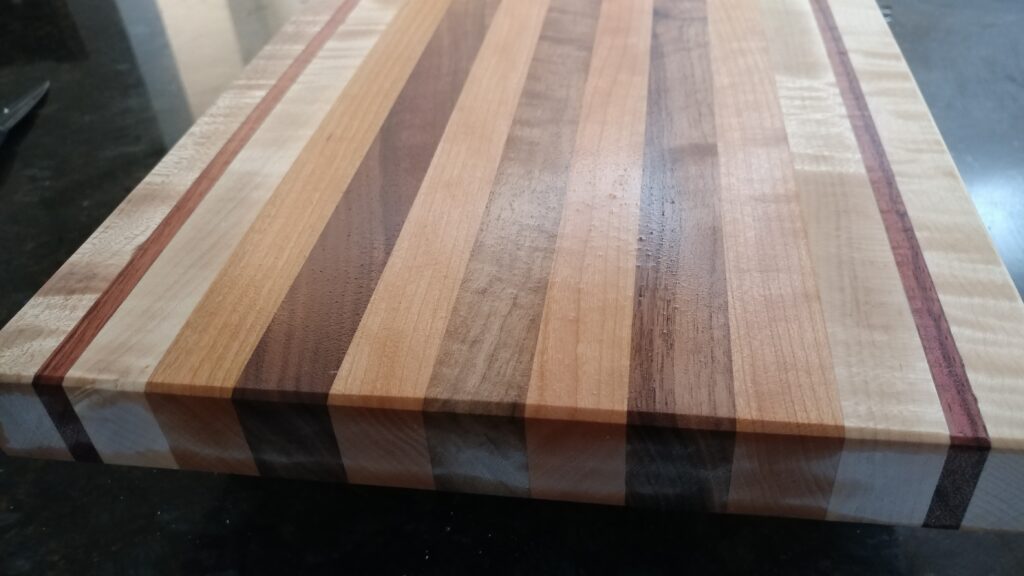
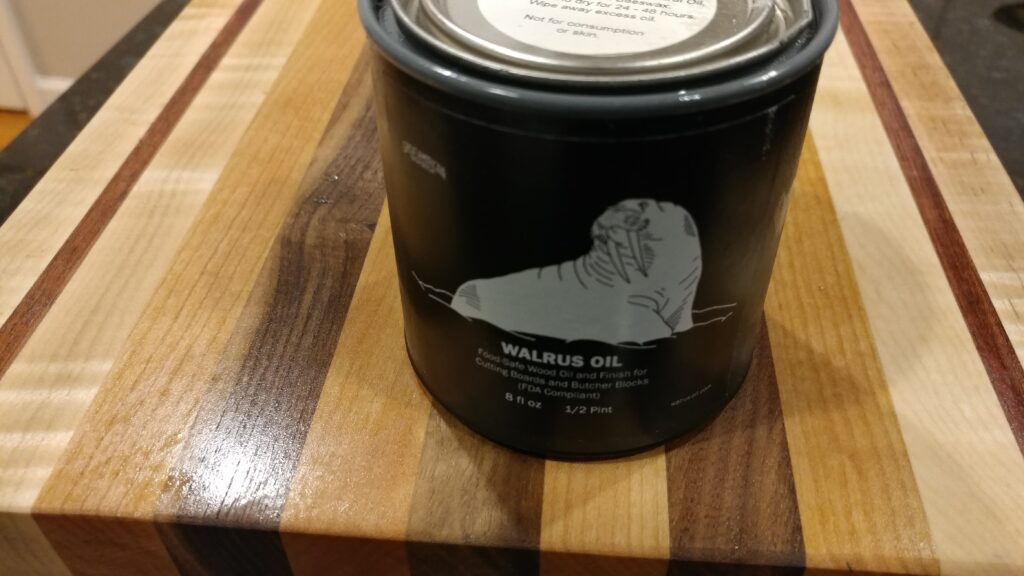
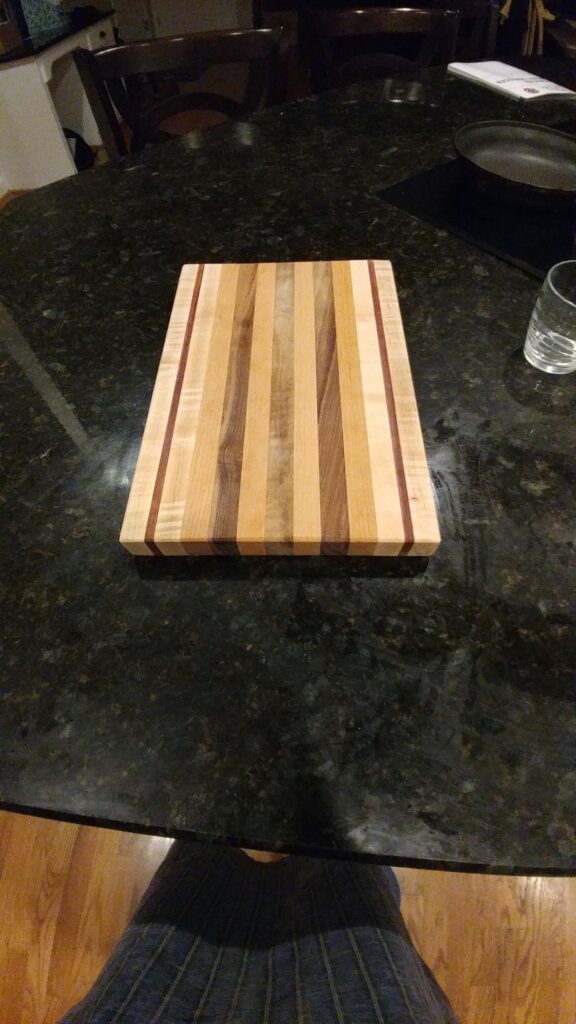
What a well-kept board looks like
Lifespan
How long does a hardwood board last?
A well-built board that is washed by hand and oiled regularly lasts for decades. It doesn’t wear out the way plastic does: when the surface gets tired, you sand it back and oil it, and it’s close to new again. That repairability is the main reason a good wooden board is worth the price.
Warning signs
Signs your board needs attention
The water test
Sprinkle a few drops of water on the board. If they bead up, it’s well oiled. If they soak in quickly, it’s time to oil. It is the simplest check there is.
Rough or dull surface
A dry board looks gray and flat and feels rough. Oil brings back the color, usually with the first coat. If it still feels rough, sand lightly with 220-grit and oil again.
Fine cracks
Small cracks along the grain mean the board has been too dry for too long. Sand lightly, then oil several times over a week or two.
Warping
A board that rocks on the counter has dried unevenly, usually from oiling one side only or drying it flat. Correct the habit first. For a bad warp, contact me before trying to fix it.
Deep knife marks
Light marks are normal. When they’re deep enough to trap food, it’s time for a sanding.
Setting the record straight
Common myths about wooden cutting boards
Are wooden cutting boards sanitary?
Studies comparing used wooden and plastic boards, including research by food-safety scientist Dean Cliver, have found that clean, well-kept wooden boards are no less sanitary than plastic ones. Ak, Cliver and Kaspar, 1994. Deep knife grooves in plastic can be harder to clean. Keep any board clean, dry and smooth. Read Ak, Cliver and Kaspar’s 1994 cleaning study.
Can I use olive oil or coconut oil on a cutting board?
Cooking oils can turn rancid inside the wood and leave a smell that is hard to remove. Food-grade mineral oil doesn’t go rancid.
Does a board that looks fine still need oil?
Dark woods like walnut can hide dryness. The water test tells you more than your eyes do.
Can a warped cutting board be fixed?
Mild warping can often be corrected, especially if it’s caught early. Contact me before you try.
What you’ll need
Supplies for wood cutting board care
Food-grade mineral oil
Sold at grocery stores and pharmacies; look for “food grade” or “USP” on the label. One bottle lasts a long time.
Board butter
Mineral oil blended with beeswax. Use it after oiling for a little extra protection, or on its own for monthly care.
Sandpaper
Keep 120, 180 and 220 grit on hand, plus 80 grit for a full refinish.
Questions
Have a question about your board?
Still unsure about a board you own? Ask me anything about care or restoration. I’m happy to help with any Koshur Chaan board. Questions about wood, ordering or pickup? Browse the full Cutting Board FAQ.