
About Koshur Chaan
The Kashmiri carpenter in Johns Creek
The Koshur Chaan woodworking story begins in Kashmir, with Maam Kol, our family carpenter. As a boy I spent hours beside him, eating from his tiffin carrier, holding the scraps of wood he handed me, and taking one side of his plane to pull it with him. He was my first teacher, though neither of us knew it then, and I can still see that workshop clearly today.
The maker
Built by hand,
made with purpose
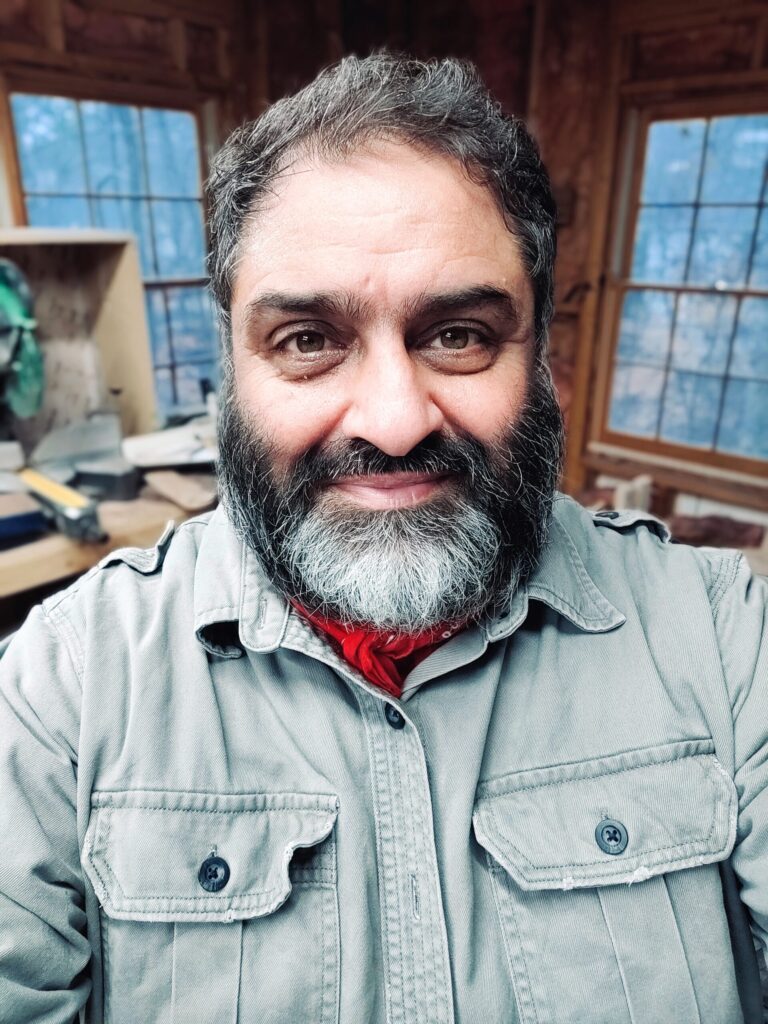
woodworker since 2015
Johns Creek, GA
“Koshur Chaan” means “Kashmiri carpenter.” The name honors Maam Kol and the long tradition of Kashmiri craftsmanship I grew up around. I try to carry his standards into every board: precision, patience and respect for the wood.
I’m Ishtyaq Qadri, though most people know me as Wosta, a Kashmiri word for a master craftsman. By day, I’m a healthcare provider caring for our nation’s veterans. In 2015, while fixing things around the house, I made a few cutting boards for friends. I realized I still had the skills, and that the work gave me a kind of peace and calm I had not found anywhere else.
That is how Koshur Chaan Woodworking LLC began.
The two crafts have more in common than you might expect. Good clinical work and good woodwork ask for the same things: patience, attention to detail, respect for the process, and no shortcuts where it matters. A cutting board gets used every day for decades. It should be built that way.
Every board is made by hand in Johns Creek, Georgia, one at a time after an order is confirmed, from walnut, maple and cherry with food-safe finishes. It isn’t the fastest way to work. It’s the only way I know to make something worth standing behind.
I don’t keep stock. Each board is made for one particular person, and that is what makes each one special. Some customers have told me their board is too beautiful to cut on, so it stays on display. I understand the feeling, but I build every board to be used.
The process
How I make a board
Every board goes through the same four stages, and none of them is rushed.
- Wood selection. I look at each piece of lumber for grain, density and defects before I cut anything.
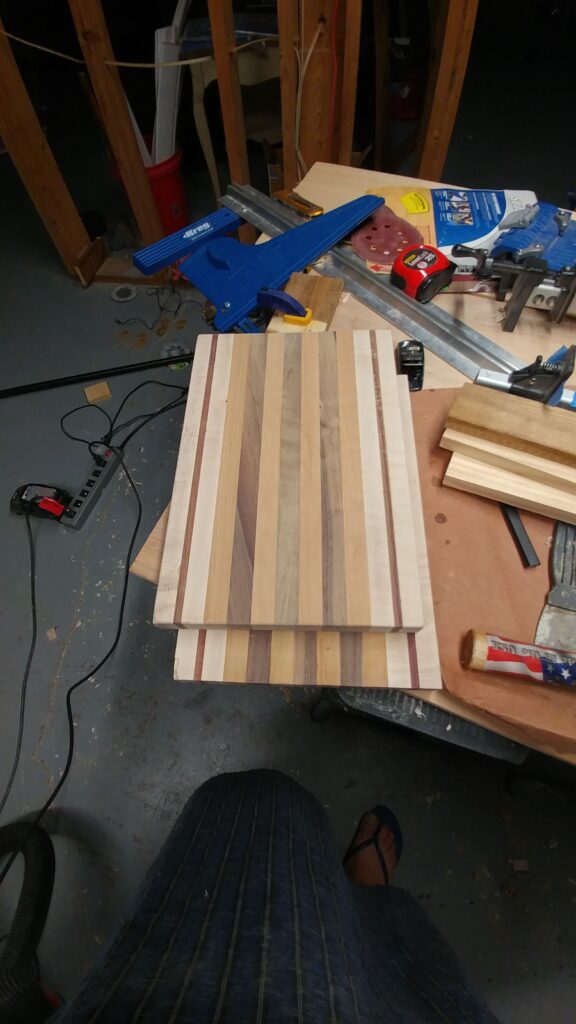
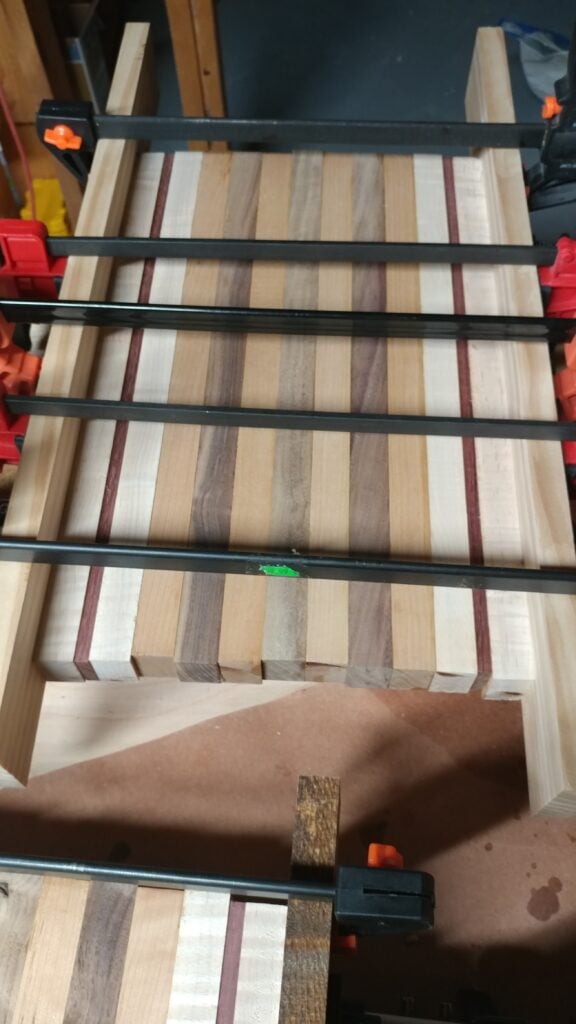
- Milling and glue-up. The strips are milled flat and square, then glued under even clamping pressure so the board stays flat.
- Hand sanding. I sand all six surfaces through progressive grits, from 80 to 220, until the board feels smooth everywhere your hand touches it.
- Oiling. Three to four coats of food-grade mineral oil, each allowed to soak in fully, then beeswax board butter. The board doesn’t leave until the oil has done its work.
Materials
The woods I use
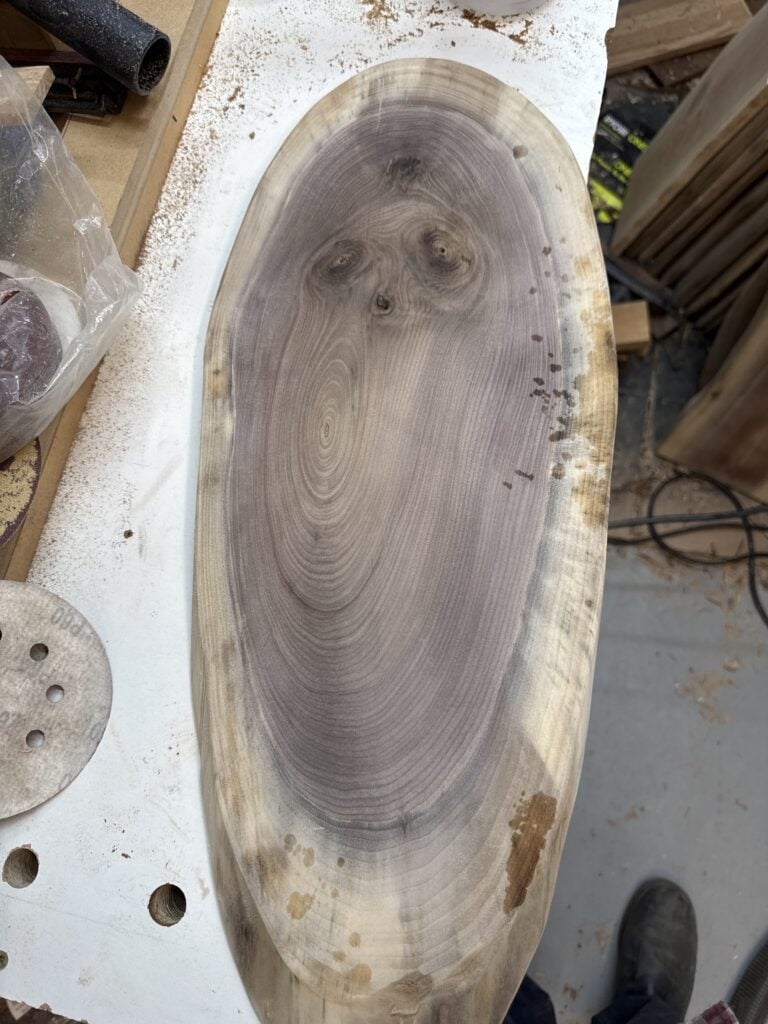
Black walnut
Rich chocolate brown with tight grain. A little softer than maple, so it is easy on knife edges. The most popular wood for gift and serving boards.
Hard maple
Dense, closed-grain and bright cream in color. The most durable of the three and the classic choice for heavy daily prep.
Cherry
Starts a pale pinkish tan and darkens to a warm red-brown with use and light. It is the wood that changes most with age.
For custom orders, I sometimes add accent woods such as purpleheart, yellowheart or bloodwood when they are available.
Standards
What I hold myself to
Precision
Flatness is not approximate. Joinery is not close enough. Square means square.
Patience
Good work takes the time it takes. The oil soaks in fully and the sanding is finished properly, whatever the schedule says.
Would I use it?
Every board has to pass one test before it leaves: would I be proud to use it in my own kitchen?
Made to be used
These boards are meant to live on the counter and be used every day, not saved for guests. With a little oil once a month, they get better with use.
Every board is made from black walnut, hard maple or cherry, finished with food-grade mineral oil and beeswax board butter, and starts at $50. Pick up in Johns Creek by appointment, or have it shipped anywhere in the U.S.
In the workshop
Inside the Johns Creek shop
From Kashmir
The heritage behind the Koshur Chaan woodworking story
I also write about the craft traditions and trees of Kashmir, where this work comes from.
Trees of Kashmir
The chinar, walnut, deodar and more, with their Kashmiri, English and botanical names. Read the guide to Kashmiri tree names →
A shikara far from home
A traditional Kashmiri boat, built by hand for a family wedding far from Kashmir. Read the shikara wedding build story →
Kashmiri walnut carving
The skill, history and hidden workmanship beneath the surface of a carved piece. Read about Kashmiri walnut carving →
Find me
Where to see the boards
Studio visits in Johns Creek are by appointment, so you can see and hold the boards before you order. Contact me to arrange a studio visit.
Made in Johns Creek, Georgia
Every board made by hand.
Every order handled personally.
Whether you want an everyday board, a gift, or a custom piece in your size and wood combination, your board becomes part of the Koshur Chaan woodworking story. Tell me what you have in mind and I’ll take it from there.