
Kashmiri Walnut Carving: The Craft Beneath the Surface
Kashmiri walnut woodcraft
The beauty we see is only half the work.
Kashmiri walnut woodcraft brings together timber, carving, furniture-making and memory. Its visible beauty is extraordinary. Yet the tradition deserves to be understood in full: the history around it, the knowledge in the wood, the hands behind the work and the standards hidden beneath the carving.
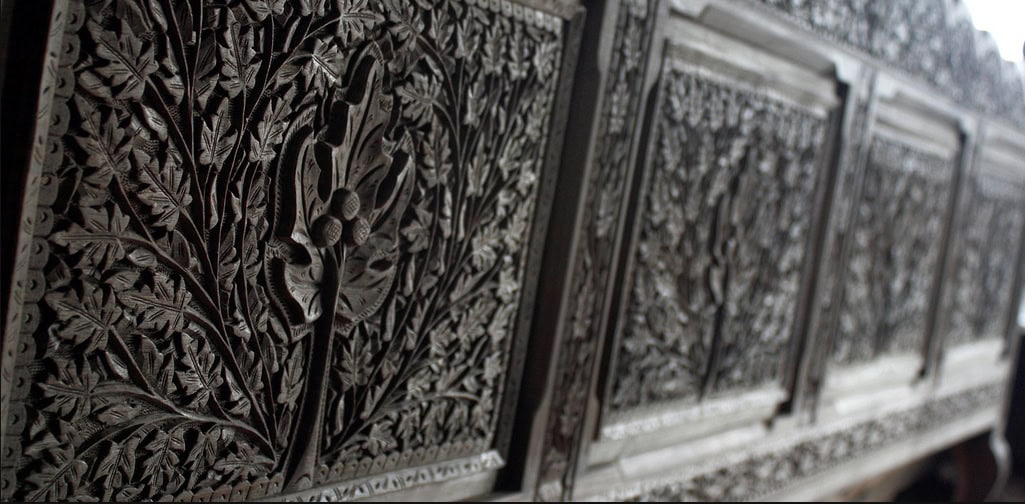
A layered beginning
Kashmir’s relationship with wood is older than any one craft origin story. Timber architecture, built with local woods such as deodar, was already central to the Valley’s homes, shrines, bridges, doors and windows. Its practical forms developed in a mountainous, earthquake-prone landscape where joinery and flexibility mattered.
Later histories and oral accounts commonly connect the flowering of decorative crafts with Kashmir’s cultural exchanges with Persia and Central Asia during the fourteenth and fifteenth centuries. These accounts often associate Shah-i-Hamadan and later Sultan Zain-ul-Abidin with artisans, ideas and patronage. The exact details vary between sources; what is clear is that Kashmiri makers did not simply copy outside forms. They made them their own.
Patronage, architecture and changing markets
Accounts of Sultan Zain-ul-Abidin’s reign often describe a period in which crafts and public works received strong encouragement. Woodwork is commonly discussed alongside lattice screens, carved interiors and the patterned ceiling traditions known as pinjrakari and khatamband. These forms show how geometry, light and patient fitting can turn wood into architecture.
Through later Mughal, colonial and modern periods, Kashmiri woodwork continued to adapt. Architectural work, furniture, screens, panels, boxes, trays and other objects all travelled through changing homes and markets. The shift toward portable, richly worked pieces made the craft visible far beyond the Valley. A living tradition changes with its customers; it should never have to abandon its standards to do so.
Today, Kashmir Walnut Wood Carving is formally recognized as a geographical indication in India. That links the craft to a place, a community and inherited knowledge—not merely a decorative style.
Why walnut matters
The common or Persian walnut, Juglans regia, is widely known in Kashmir as Doon or Doon Kul. Its warm brown color, expressive grain and ability to hold fine carving make it especially prized for furniture, panels and decorative objects. Craftspeople may distinguish darker, more figured root material from the more even timber used in structural furniture, although workshop vocabulary and grading can vary.
Walnut rewards patience. Many makers describe a gradual process of drying and stacking boards so that moisture can leave evenly before carving or construction begins. The principle is simple even when methods differ: wood that is rushed may twist, check, split or later fight the joints holding it together. Fine work begins long before the first carving mark.
More than one pair of hands
Traditional workshop accounts often describe a division between the person who prepares and builds the wooden body of a piece and the person who draws and carves the design. The terms chaan for a joiner or cabinetmaker and naqash for a carver appear in craft descriptions, though language can vary by family and workshop.
The work may move from selected boards to planing, layout, joinery, carving, fitting, smoothing and finishing. Gouges and chisels of many sizes do the patient work of bringing a drawing into relief. The highest standard is not a choice between art and engineering. It is both, working together.
Depth, openwork and the language of carving
Descriptions of Kashmiri walnut carving often distinguish between shallow relief, deeper relief, incised line work and delicate openwork or undercut carving. Terms such as khokerdar, jali-dar, vaburavith and padri are used in some craft accounts; their exact use can vary.
Whatever the name, the difference is visible. A shallow pattern catches light quietly. Deep relief creates shadow and sculptural form. Openwork asks the carver to remove material from behind a design so that leaves, vines or lattice seem to float. None of these effects should be allowed to distract from the structure supporting them.
Traditional styles & motifs
Craft descriptions commonly use these names for the distinctive ways walnut is carved and fitted. Usage can vary between workshops and districts.
| Style / technique | Characteristics |
|---|---|
| Undercut (Jali-dar) | Deep, multi-layered openwork where the background is hollowed out to create a three-dimensional effect. |
| Deep relief (Ubhar) | Carving that may project up to about two inches from the base plane, often used for animal, jungle and court scenes. |
| Shallow relief (Padri) | Low-relief etching for subtle borders, vine tendrils and decorative boxes. |
| Pinjrakari & Khatamband | Architectural lattice work and interlocking geometric polygonal ceilings, traditionally assembled through precise fitting rather than visible nails. |
What the motifs carry
The visual vocabulary of Kashmiri woodcraft is rooted in the landscape and in wider artistic traditions. Chinar leaves, known as boun, may appear in realistic or wind-blown forms. Almond or paisley-like badam shapes travel across shawls, metalwork and wood. Lotus, iris, rose, grapevine, birds and geometric arabesques add further layers of meaning and movement.
A fine finish can let that vocabulary speak without burying it beneath plastic shine. Some traditional approaches favor burnishing and wax; contemporary workshops use a range of finishes. The important question is whether the finish respects the material, protects the work and allows the carving to remain alive to touch and light.
What lies beneath the carving
Turn a carved table upside down or open the drawer of a striking cabinet, and the story can change. Weak joinery, inadequate support, rough interior surfaces and no allowance for wood movement can turn a beautiful object into a disappointment. A drawer binds. A panel cracks. A table loosens. The heirloom promise disappears.
This is not a failure of talent. It is a failure of intent. When work is made only for the photograph, we abandon the soul of the craft. Real woodworking asks for patience precisely where most people will never look.
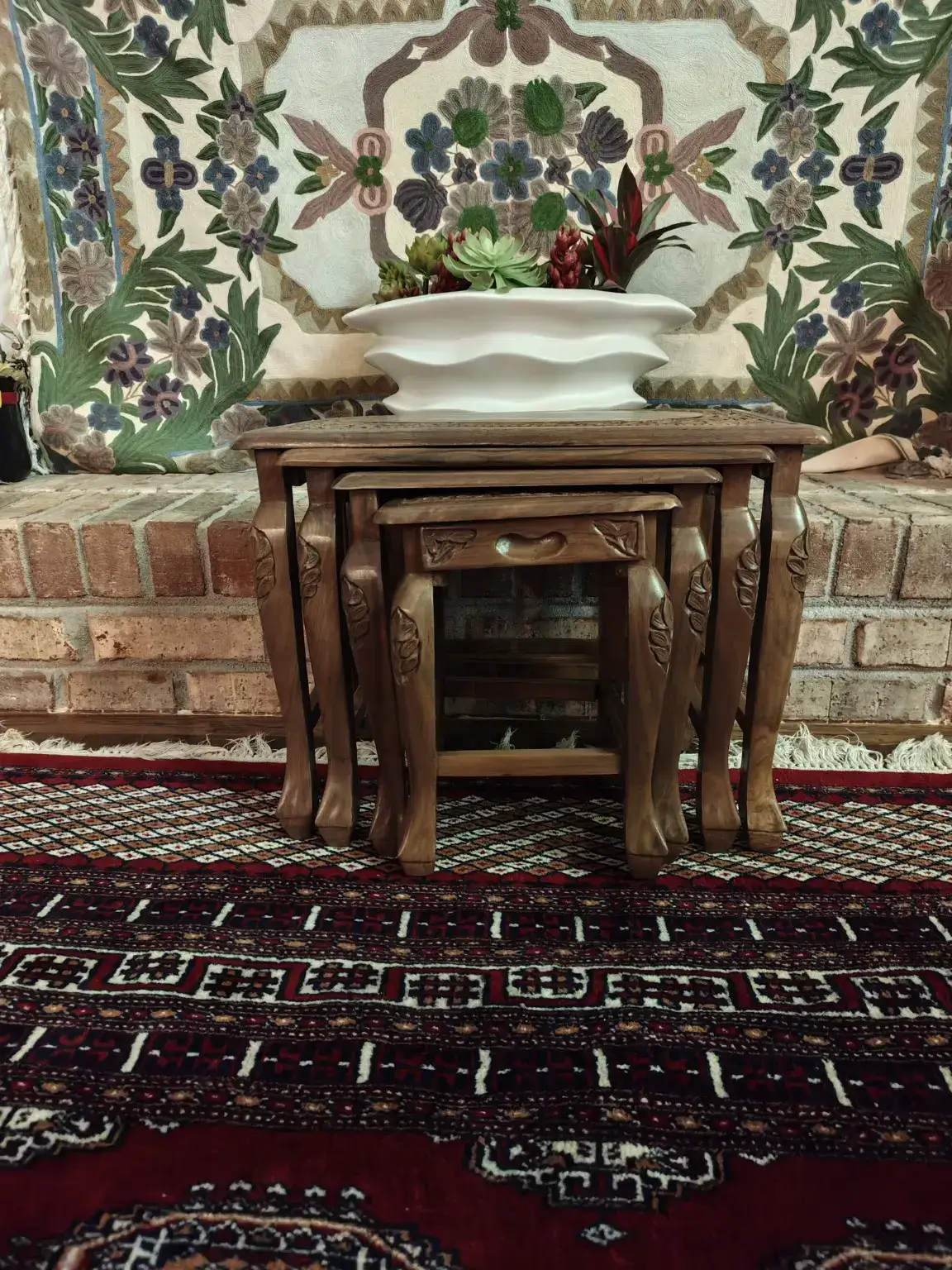
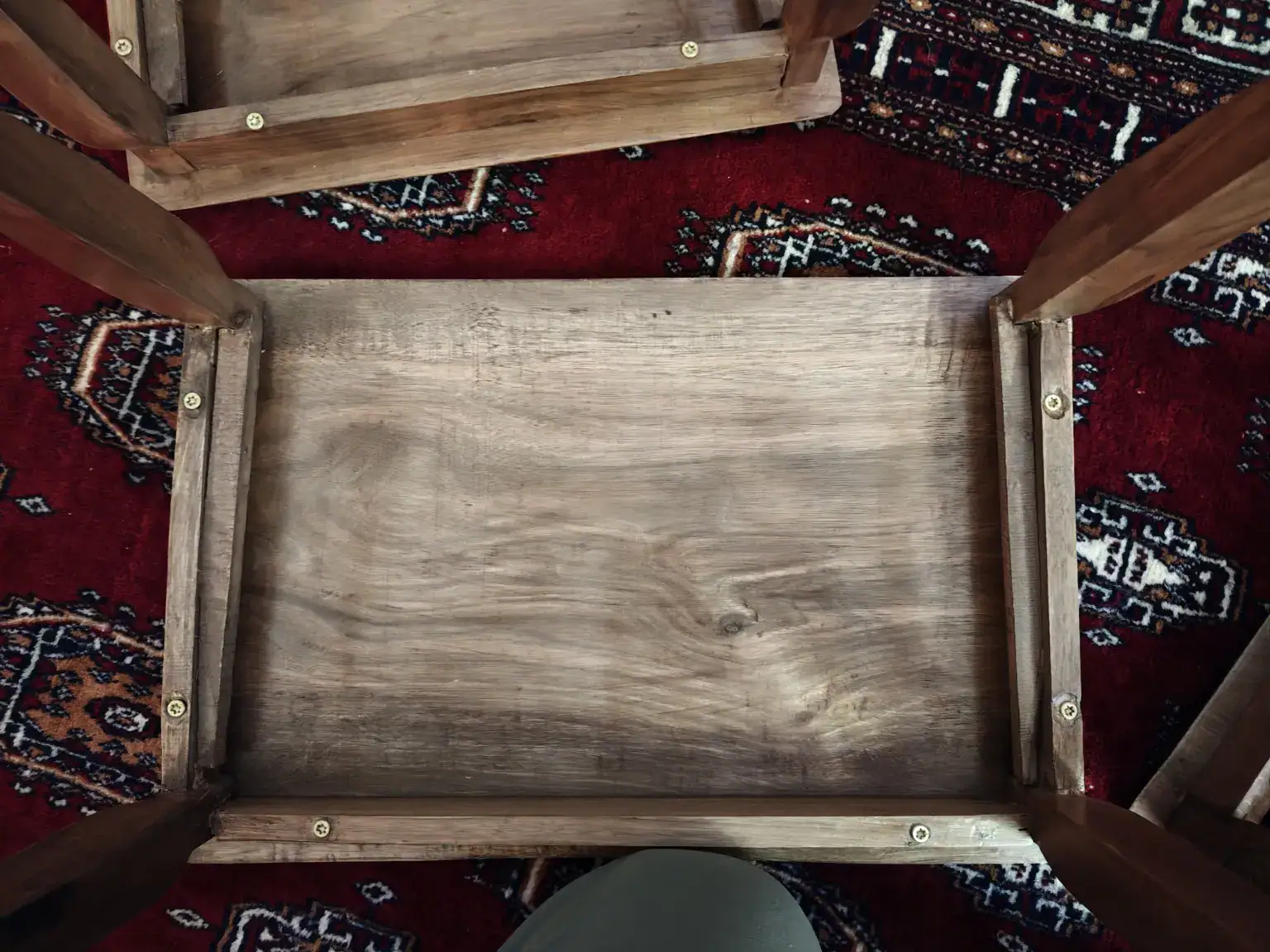
“True craftsmanship is defined not by what is put on display, but by the care taken in the shadows.”
Trust is part of Kashmiri craftsmanship
Craftsmanship includes quality control, clear pricing, honest communication, sensible timelines and accountability after delivery. When someone commissions a Kashmiri piece, they are investing in a promise as much as an object.
One poor experience does not only harm one customer. It can color how people speak about an entire tradition. In a connected world, that cost travels quickly. Historic beauty cannot carry the work by itself; it has to be matched with modern business sense, transparency and standards that hold up when the piece is inspected from every side.
There are also present-day pressures that deserve empathy: long training, changing markets, limited raw materials, imitation, low or unstable pay, and younger people being understandably reluctant to enter work that is difficult to sustain. Protecting a craft means caring about the conditions in which honest makers can continue.
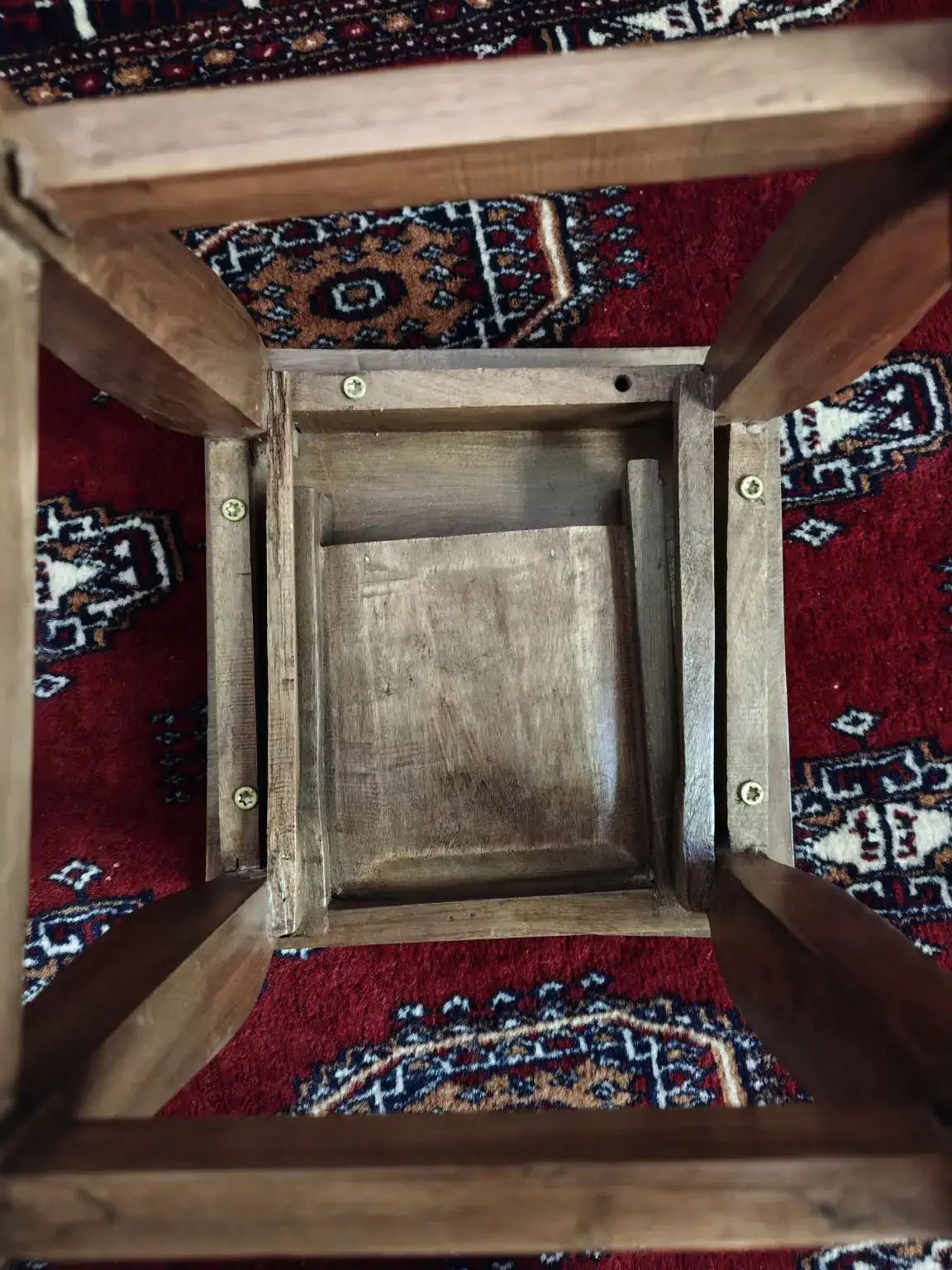
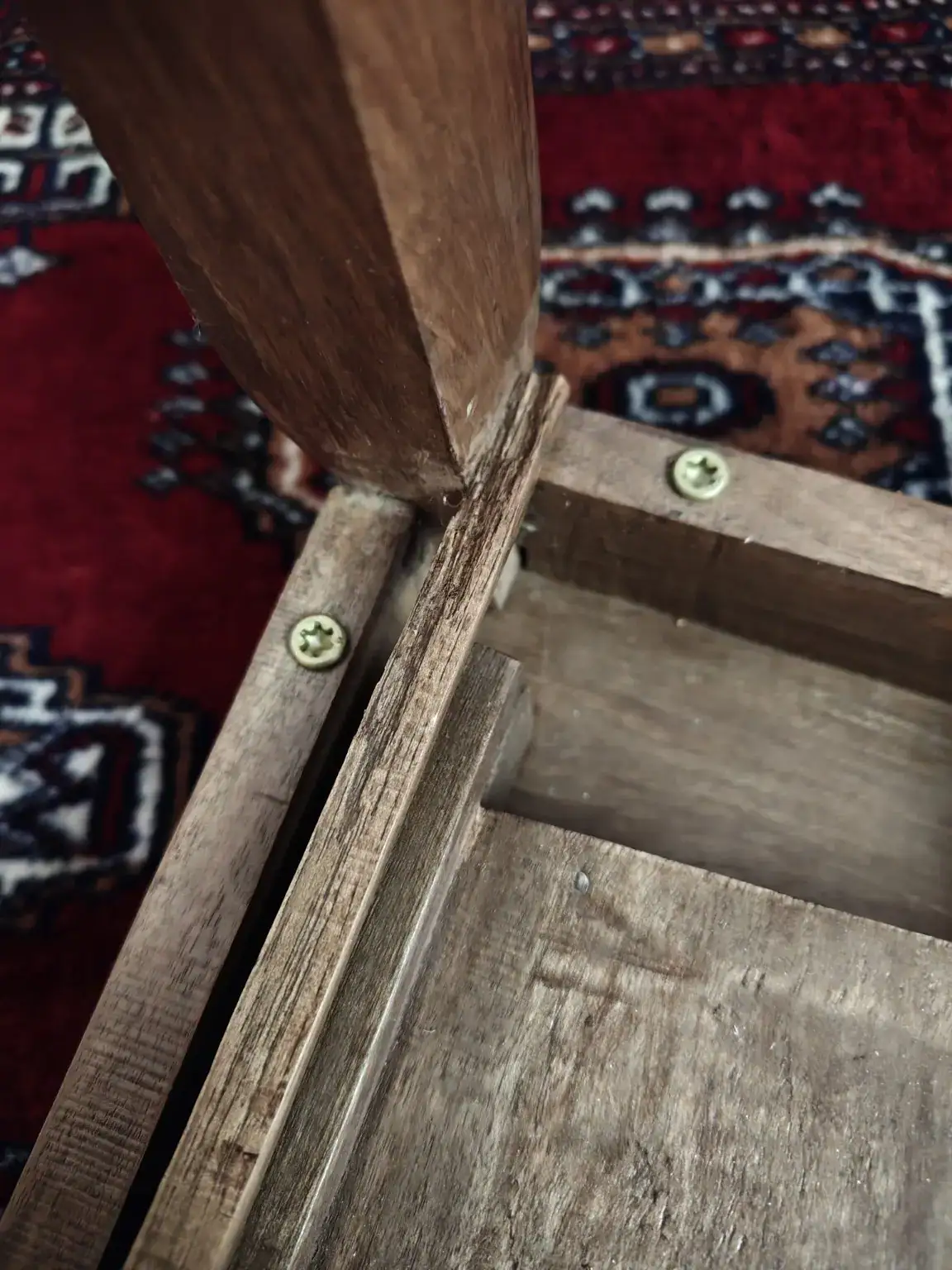
The Kashmiri name must mean something.
Every hidden joint, every internal support and every promise made to a customer is a reflection of who we are. Let the work we send into the world carry a standard worthy of the Kashmiri name—beautiful in the light, and honest in the shadows.
Further reading
This perspective draws on published histories and craft accounts, including P. N. K. Bamzai’s A History of Kashmir, D. N. Saraf’s Arts and Crafts, Jammu and Kashmir, Jaya Jaitly’s The Craft Traditions of India, and the Government of India’s GI registration for Kashmir Walnut Wood Carving. Historical accounts and local terminology can differ by source, district and workshop; this article treats those differences with care.
@wosta ❤️
Follow @koshurchaan on Instagram