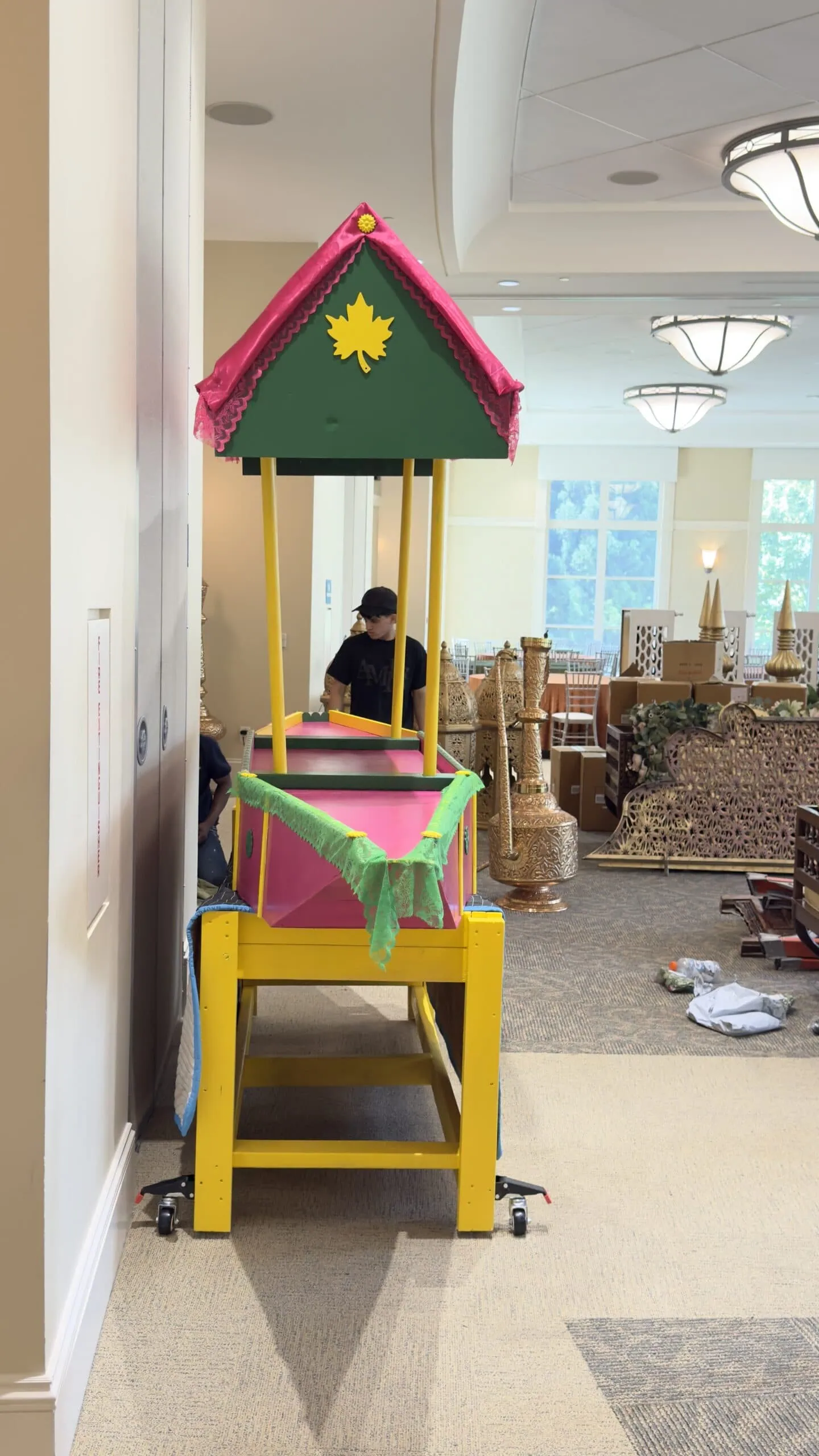
A Shikara Far From Home
A handmade Kashmiri wedding prop, a family conversation, late nights in the workshop, and the quiet joy of keeping culture alive.
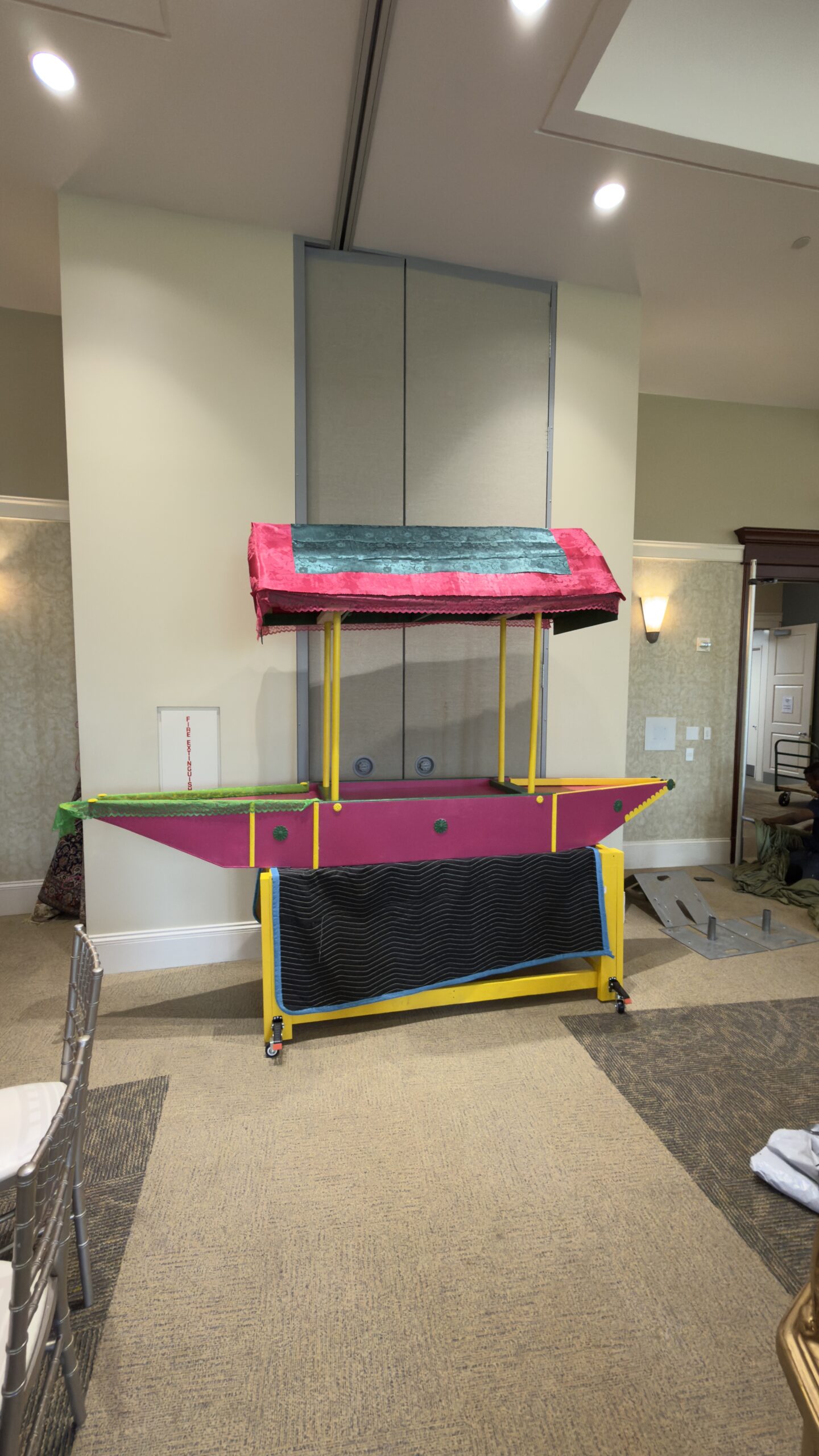
Sometimes the most meaningful stories do not begin in a workshop.
They begin around a table.
They begin in conversation.
They begin with people.
A family conversation becomes a wedding idea
This story began during the wedding planning for the daughter of a dear friend.
Like many brides, she had a vision for her special day. One of her ideas was to have a decorative cart as part of the celebration — a beautiful place for photographs, memories, and gathering with loved ones.
It was a lovely idea.
As the planning continued, conversations naturally expanded. The bride, her mother, her father, my wife, my daughter, and I found ourselves discussing possibilities and sharing ideas. Like most family conversations, there was no grand plan to create something extraordinary. Everyone simply wanted the wedding to feel beautiful, personal, and meaningful.
“Why not a shikara?”
For a moment, the room became quiet.
The more we talked about it, the more it felt right.
Not because the cart was not beautiful.
But because the shikara carried something more.
A story.
A memory.
A connection to home.
And perhaps that feeling is where this story truly begins.
Before you read further, I invite you to pause for a moment.
Close your eyes.
Take a slow breath.
Imagine yourself sitting in a wooden shikara on Dal Lake.
The morning air is cool against your face. A thin layer of mist drifts across the water. The mountains stand quietly in the distance. The lake is so still that it reflects the sky like a mirror.
For a moment, there is only silence.
Then you hear it.
The wooden paddle slips gently into the water.
A soft splash.
A slow pull.
A quiet swirl.
Glide.
Silence.
Splash.
Glide.
Silence.
The boat moves forward effortlessly. Small ripples spread across the surface before disappearing into stillness.
A flower seller drifts by carrying blossoms arranged in vibrant colors. In the distance, a vendor’s voice carries gently across the water. The fragrance of lotus flowers mixes with the fresh morning air.
Nothing feels rushed.
Nothing feels urgent.
Time seems to slow down.
For many Kashmiris, these are not simply images.
They are memories.
And perhaps your memories are different. Perhaps they come from another place. A grandmother’s kitchen. A childhood street. A favorite room in a family home. A familiar smell. A familiar sound. A place that instantly brings you comfort.
We all carry places within us.
We all carry pieces of home.
For many Kashmiris, the shikara is one of those pieces.
It is much more than a boat.
It is a vessel of memory.
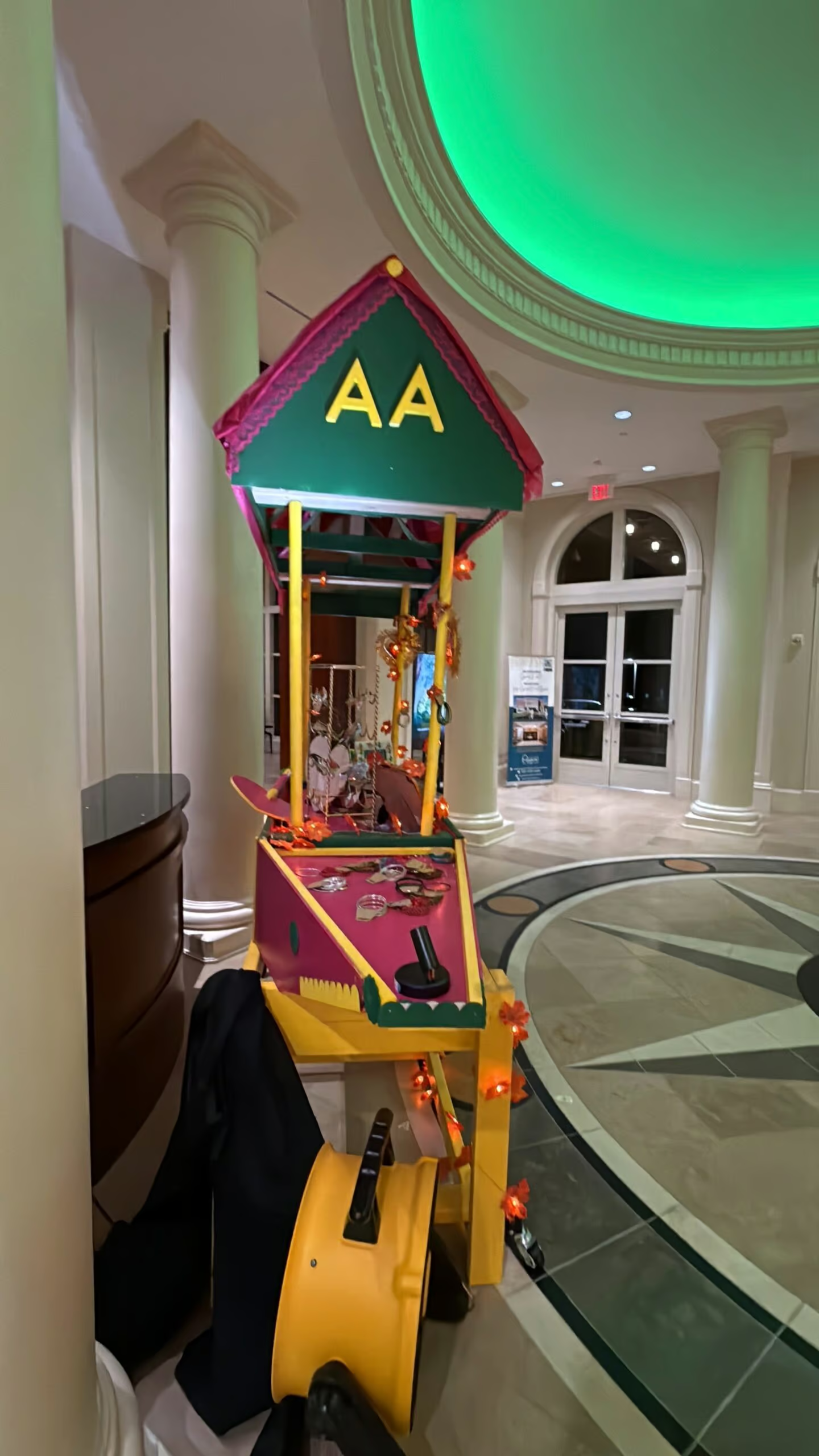
A Brief Pause: The Story of the Kashmiri Shikara
A Kashmiri knows that sound.
The soft dip of the paddle.
The gentle pull through the water.
The quiet pause before the next stroke.
Glide.
Silence.
For centuries, shikaras have been part of everyday life on Dal Lake and Nigeen Lake. Traditionally handcrafted from durable deodar cedar, these graceful boats carried families, merchants, flowers, vegetables, schoolchildren, visitors, and stories across the waterways of Kashmir.
A traditional shikara is instantly recognizable. The boatman usually sits toward the rear, guiding the boat with a single wooden paddle. Guests sit comfortably in the middle beneath a canopy, surrounded by cushions, color, and the quiet beauty of the lake.
Many shikaras carry painted nameplates, each giving the boat its own identity and personality. Some names are poetic. Some are playful. Some feel like tiny love letters floating on water.
To an outsider, it may simply be a beautiful boat.
To a Kashmiri, it is something much deeper.
It is a symbol of home.
Of belonging.
Of heritage.
Of journeys taken and memories preserved.
Bringing a piece of Kashmir into the celebration
And so what began as a conversation about a wedding cart slowly became a shared vision.
What if we could bring a small piece of that feeling into this wedding?
What if we could create something that spoke of heritage without saying a word?
What if we could build something that would instantly feel familiar to every Kashmiri who saw it?
The idea was beautiful.
The reality was much harder.
Because there was one small problem.
I had never built a shikara before.
Not even remotely.
The version in my imagination looked elegant and simple.
The version in reality had other plans.
Building, rebuilding, and learning in the workshop
There were sketches.
Then new sketches.
Then changes to those sketches.
Measurements changed.
Designs evolved.
Pieces broke.
Sections were rebuilt.
Curves that looked perfect on paper somehow looked completely wrong in wood.
Hours of work occasionally ended with the realization that the only path forward was to start over.
Again.
And sometimes again after that.
What I did not realize when I started was that this project would become one of my greatest teachers.
Each challenge forced a new solution. Each mistake revealed a better approach. Small changes led to larger improvements. Details I had not considered at the beginning became essential by the end.
The shikara evolved continuously.
Lesson by lesson.
Adjustment by adjustment.
Build by rebuild.
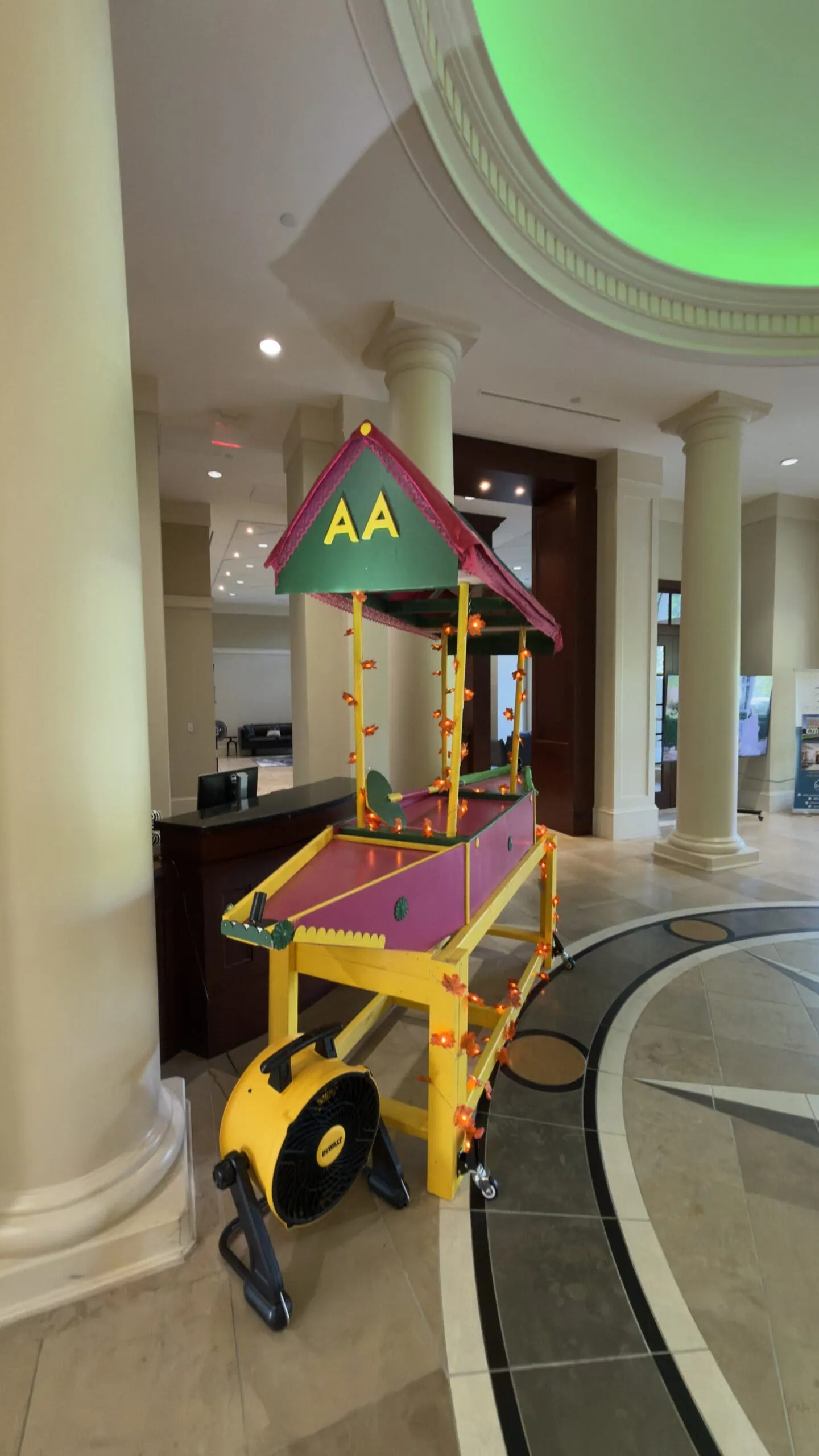
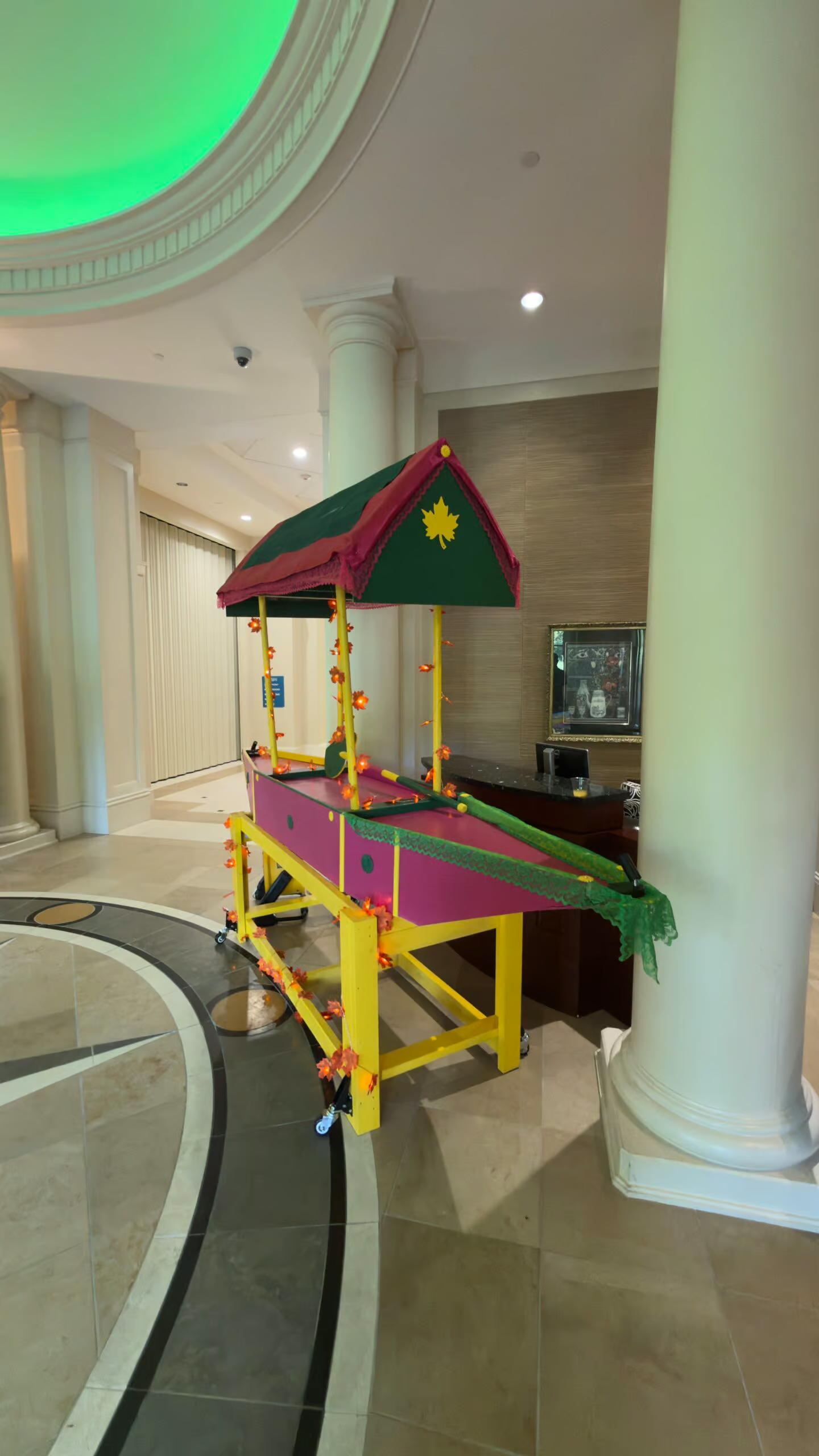
If you have ever created something, you probably know this feeling.
Whether it is building furniture, planting a garden, writing a book, raising children, building a business, or nurturing a relationship, the things that matter most rarely come together exactly as planned.
They require patience.
They require humility.
They require persistence.
This project required all three.
There were moments of excitement.
There were moments of frustration.
There were moments when progress seemed slow and the finish line felt distant.
Yet the vision remained clear.
One adjustment at a time.
One redesign at a time.
One late night at a time.
The shikara slowly began to take shape.
The challenge became even greater because I was working alone.
No team.
No assistants.
No experts nearby with answers.
Every decision.
Every mistake.
Every repair.
Every adjustment.
Every solution.
They all belonged to me.
Yet looking back now, I realize those challenges became part of the gift.
Because meaningful things are rarely created through convenience.
They are created through effort.
Through care.
Through a willingness to continue long after the excitement of a new idea has faded.
Late nights and the responsibility of handmade work
The project slowly began to take on a life of its own.
What started as a conversation around a wedding table followed me through my days and into my nights.
Between my daytime work, family responsibilities, wedding planning discussions, and spending time with my friend’s family, I would often find myself returning to the workshop long after most people had gone to bed.
Many nights ended at two or three in the morning.
Not because anyone expected it.
Not because anyone demanded perfection.
But because I could see the shikara so clearly in my mind and I was not willing to stop until what stood before me reflected the vision all of us had imagined.
There is something both rewarding and exhausting about caring deeply about a project.
You tell yourself you are finished.
Then you notice one detail.
One curve.
One proportion.
One small element that feels slightly off.
So you make another adjustment.
Then another.
And somehow midnight becomes one in the morning.
One becomes two.
Two becomes three.
The workshop grows quiet.
The neighborhood sleeps.
The world slows down.
Yet you remain there.
Sanding.
Measuring.
Stepping back.
Looking again.
Trying to bring an idea a little closer to reality.
Looking back, I realize I was not simply building a shikara.
I was carrying a responsibility.
Not because anyone placed that burden on me, but because when people trust you with something meaningful, you want to honor that trust.
The bride deserved something special.
Her parents deserved something special.
My wife and daughter believed in the idea from the very beginning.
And somewhere during those late nights, this project stopped being about woodworking.
It became an act of care.
A way of expressing gratitude for friendship.
A way of honoring heritage.
A way of contributing something meaningful to a moment that would never come again.
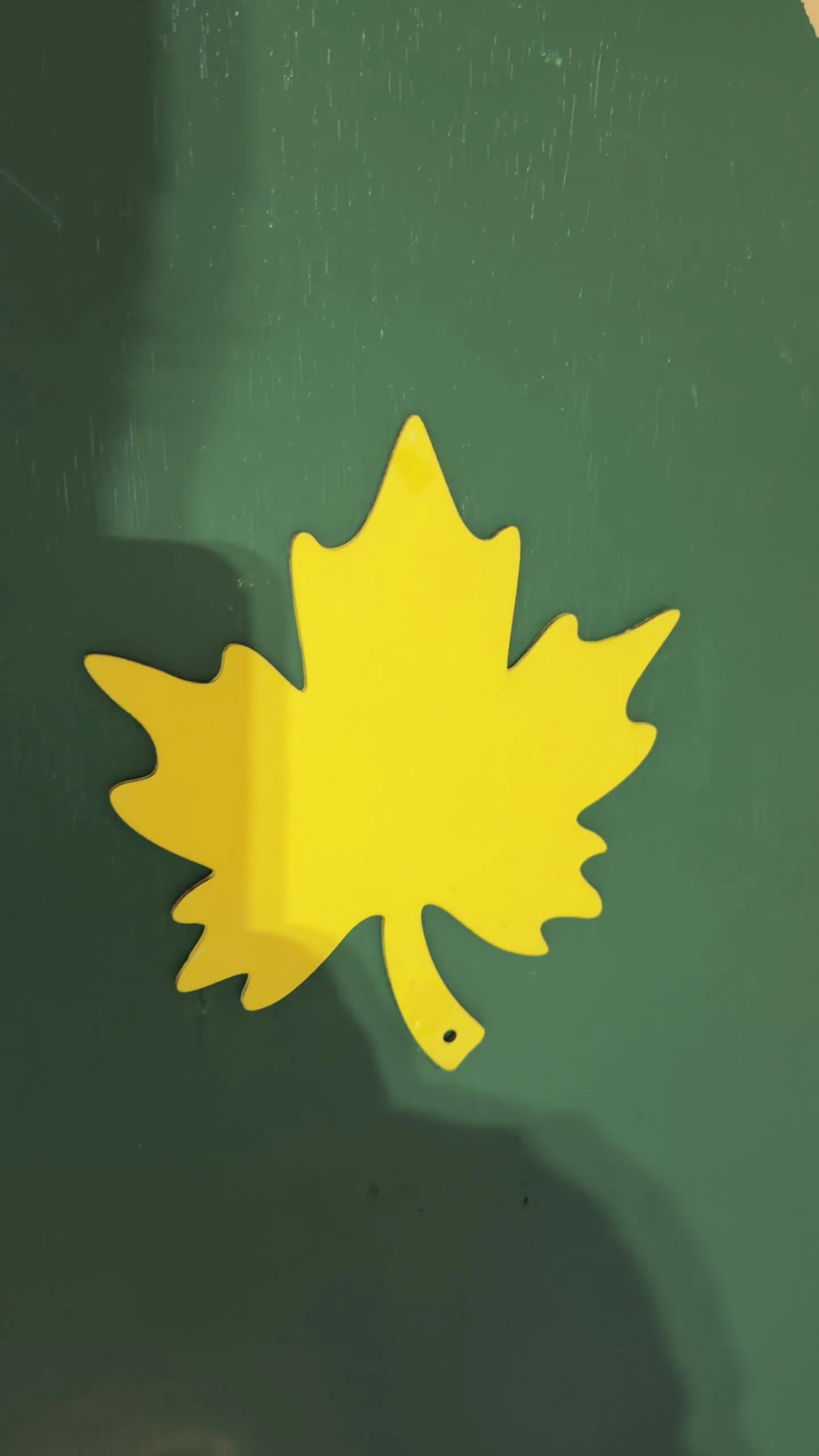
Taking the shikara to the wedding
As the wedding day approached, another challenge appeared.
Transportation.
The shikara had grown from an idea into something very real.
Something very large.
Something that now needed to travel safely to its destination.
A U-Haul truck became the final chapter of the project.
Loading it required patience.
Securing it required caution.
Driving it required trust.
Every bump in the road felt personal.
Every turn seemed sharper than usual.
And somewhere during that drive, my thoughts drifted away from woodworking altogether.
Instead, I found myself reflecting on life.
On friendship.
On family.
On how quickly the years pass.
One day children are running through family gatherings.
The next they are standing at the center of a wedding celebration.
One day parents are holding tiny hands.
The next they are letting go.
One day we are creating memories.
The next we are living inside them.
Perhaps that is why weddings move us so deeply.
They remind us that life is always moving forward.
Yet somehow love remains.
Friendship remains.
Family remains.
The connections we build remain.
Those are the things that endure.
Those are the things worth celebrating.
The bride’s first glimpse
Then came the moment.
The moment every creator hopes for.
The bride saw the shikara.
There was a pause.
A smile.
And then a twinkle in her eyes.
A genuine moment of surprise.
A moment of joy.
A moment of recognition.
And in that instant, every setback disappeared.
Every broken piece.
Every redesign.
Every late night.
Every anxious mile in that U-Haul truck.
Gone.
Because the project had accomplished its purpose.
Not by being perfect.
But by making someone happy.
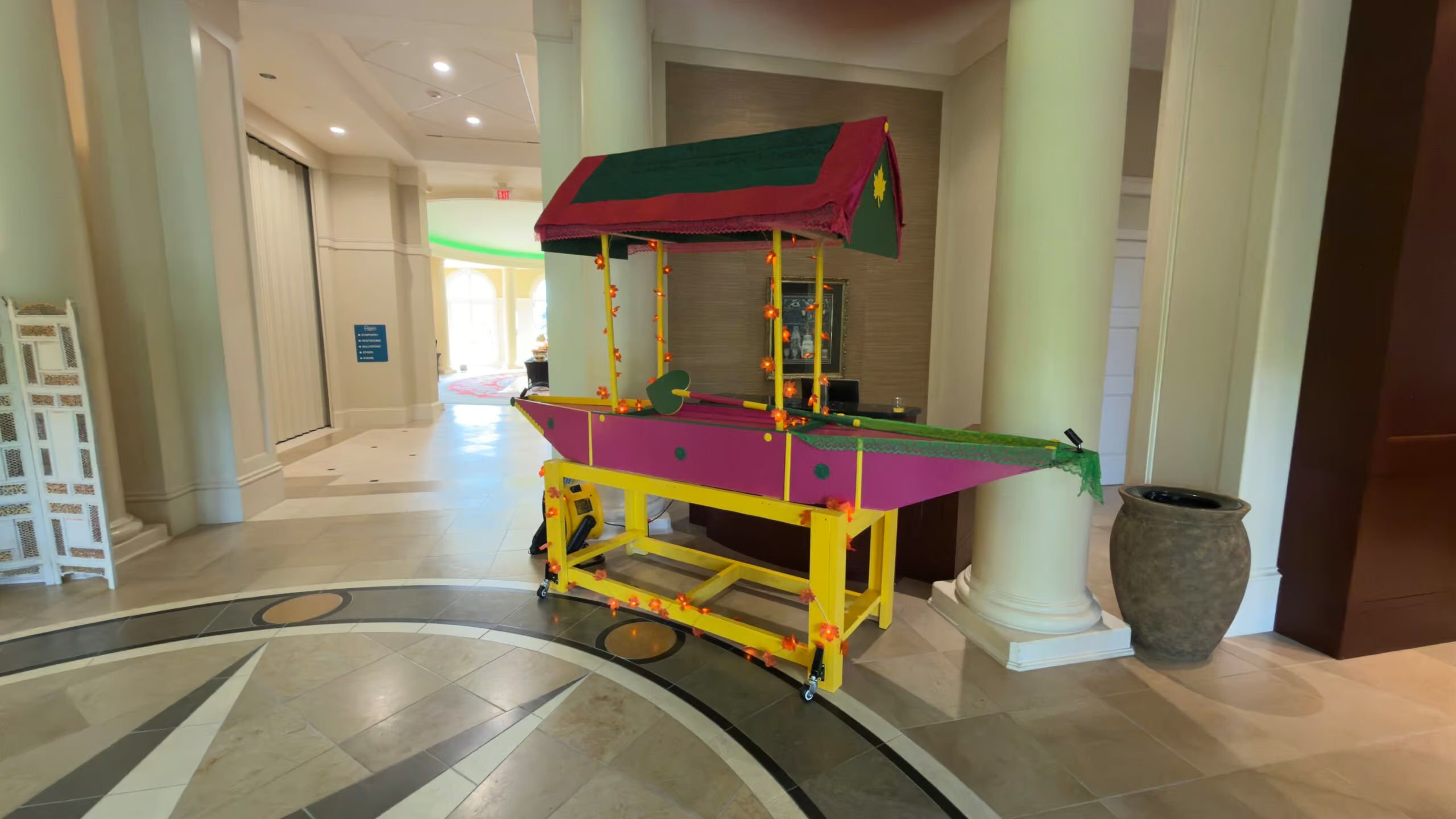
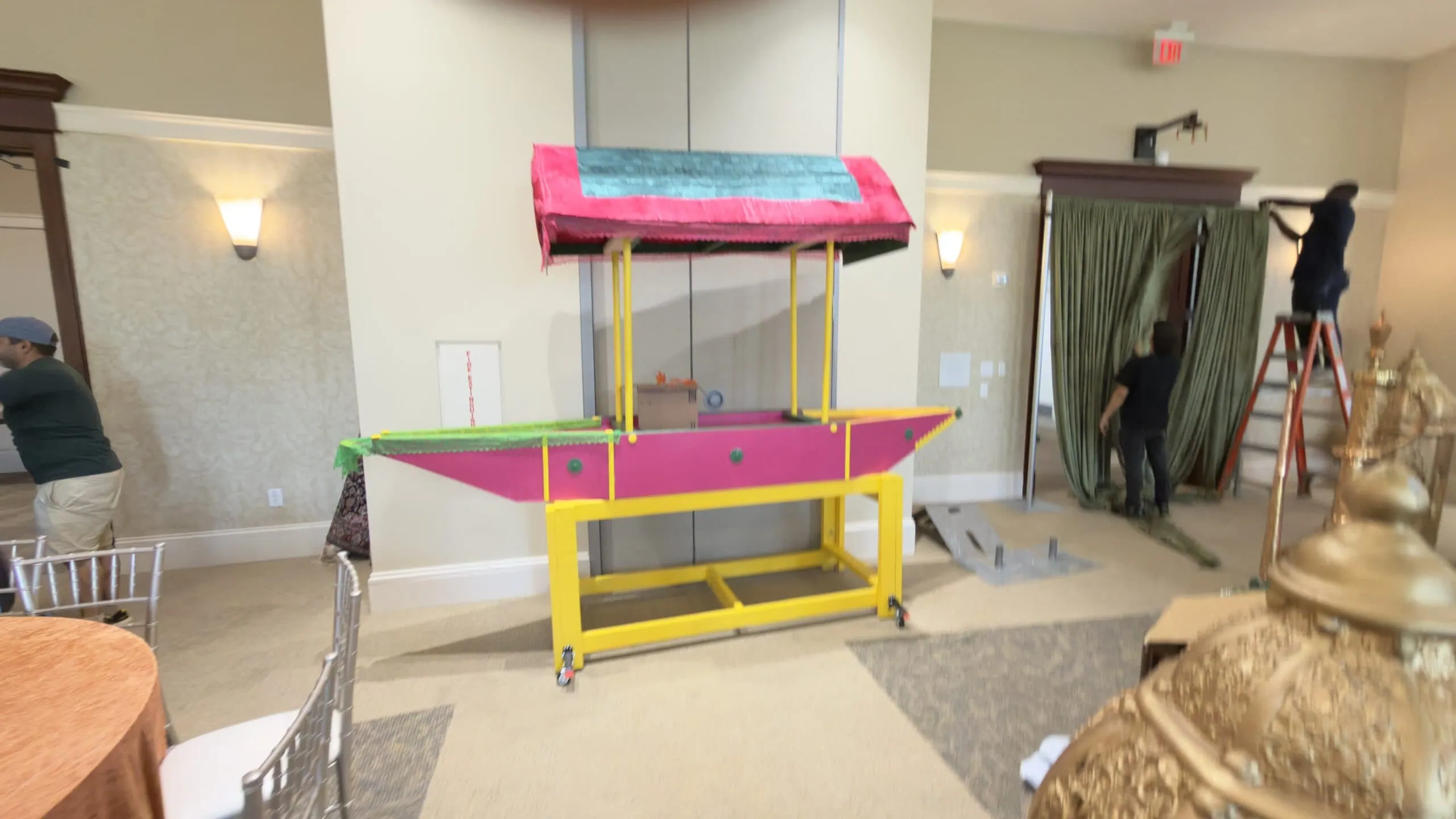
One of the most heartwarming moments came later.
As the celebration unfolded, guests naturally gathered around the shikara.
Photographs were taken.
Families posed together.
Children explored it with curiosity.
Conversations started.
Smiles appeared.
The bright yellow, green, and vibrant pink colors gave it the cheerful spirit of the shikaras that grace the waters of Kashmir.
Many guests had never seen a shikara before.
Yet they were drawn to it.
They wanted photographs with it.
They wanted to hear its story.
They wanted to become part of the story.
Watching that happen brought me tremendous joy.
Because in that moment, it felt as though the shikara was doing exactly what shikaras have always done.
It was bringing people together.
What a handmade gift can carry
That simple moment reminded me of something I hope I never forget.
The greatest joy often comes not from what we receive.
But from what we give.
A thoughtful gesture.
A helping hand.
A handmade gift.
An act of kindness.
A willingness to invest our time and effort into someone else’s happiness.
These things may seem small.
Yet they often become the memories people carry with them for years.
Long after the decorations are gone.
Long after the photographs are framed.
Long after the music has faded.
As I look back now, I do not remember every measurement, every tool, or every modification.
What I remember are the conversations.
The laughter.
The late nights.
The shared excitement.
And the people who inspired the journey in the first place.
Because this story is not really about a shikara.
It is about people.
It is about the invisible threads that connect us.
It is about preserving pieces of ourselves and passing them forward.
It is about honoring where we come from while celebrating where we are going.
For one evening, far from the waters of Dal Lake, a shikara stood proudly at a wedding celebration.
Yet somehow, if you listened closely enough, you could almost hear it.
The gentle splash of a wooden paddle.
The quiet glide across still water.
The echoes of home.
The memories waiting patiently for us to return to them.
Glide.
Silence.
Sometimes, that is where the heart finds its way home.
If you are choosing a wedding gift with the same care, explore our handcrafted hardwood boards or discuss a custom wedding board. Board prices start at USD 50 and vary by wood species and dimensions. Each custom order begins with a quote before payment.
— Ishtyaq Qadri (Wosta)
Koshur Chaan 🛶🌿✨❤️