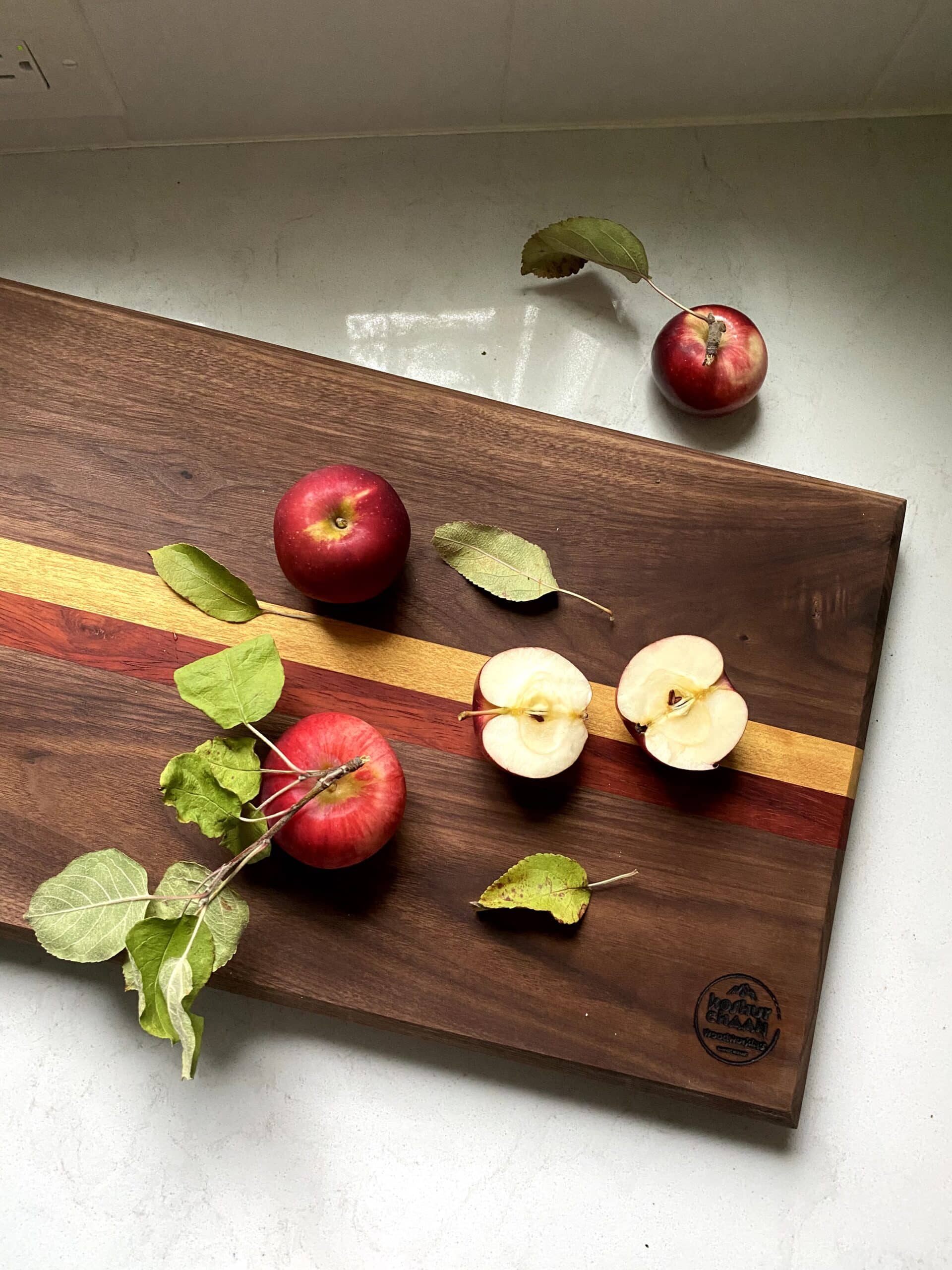
The short answer: an edge-grain cutting board is made of long hardwood strips glued side by side with the narrow edge facing up. It is lighter, simpler to maintain and costs less than an end-grain board. End-grain boards are gentler on knife edges but heavier and pricier. I build edge-grain boards in walnut, maple and cherry in Johns Creek, Georgia, because they suit daily cooking.
By Ishtyaq Qadri (Wosta), founder and maker, Koshur Chaan Woodworking. Last updated November 1, 2026.
What is an edge-grain cutting board?
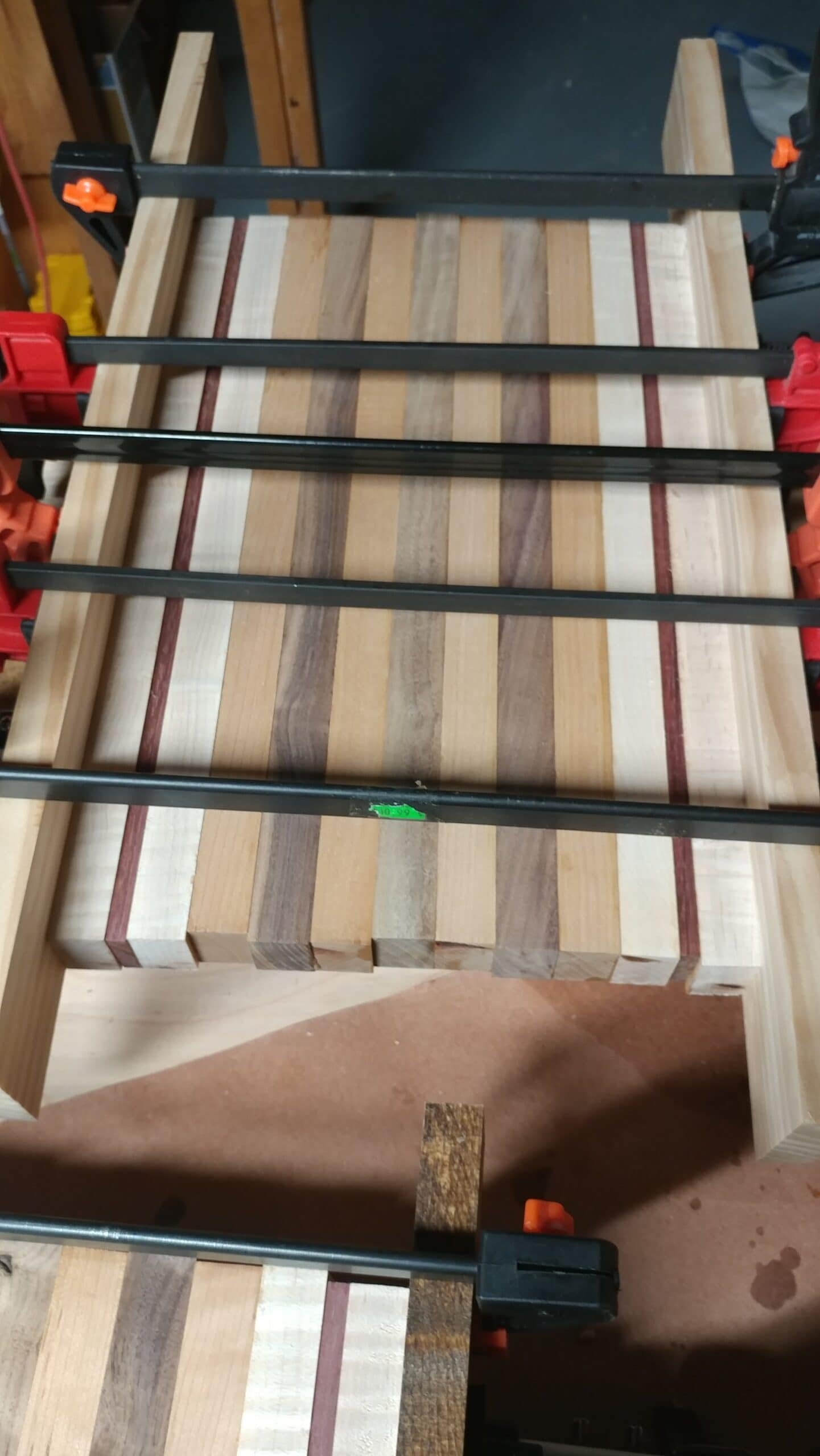
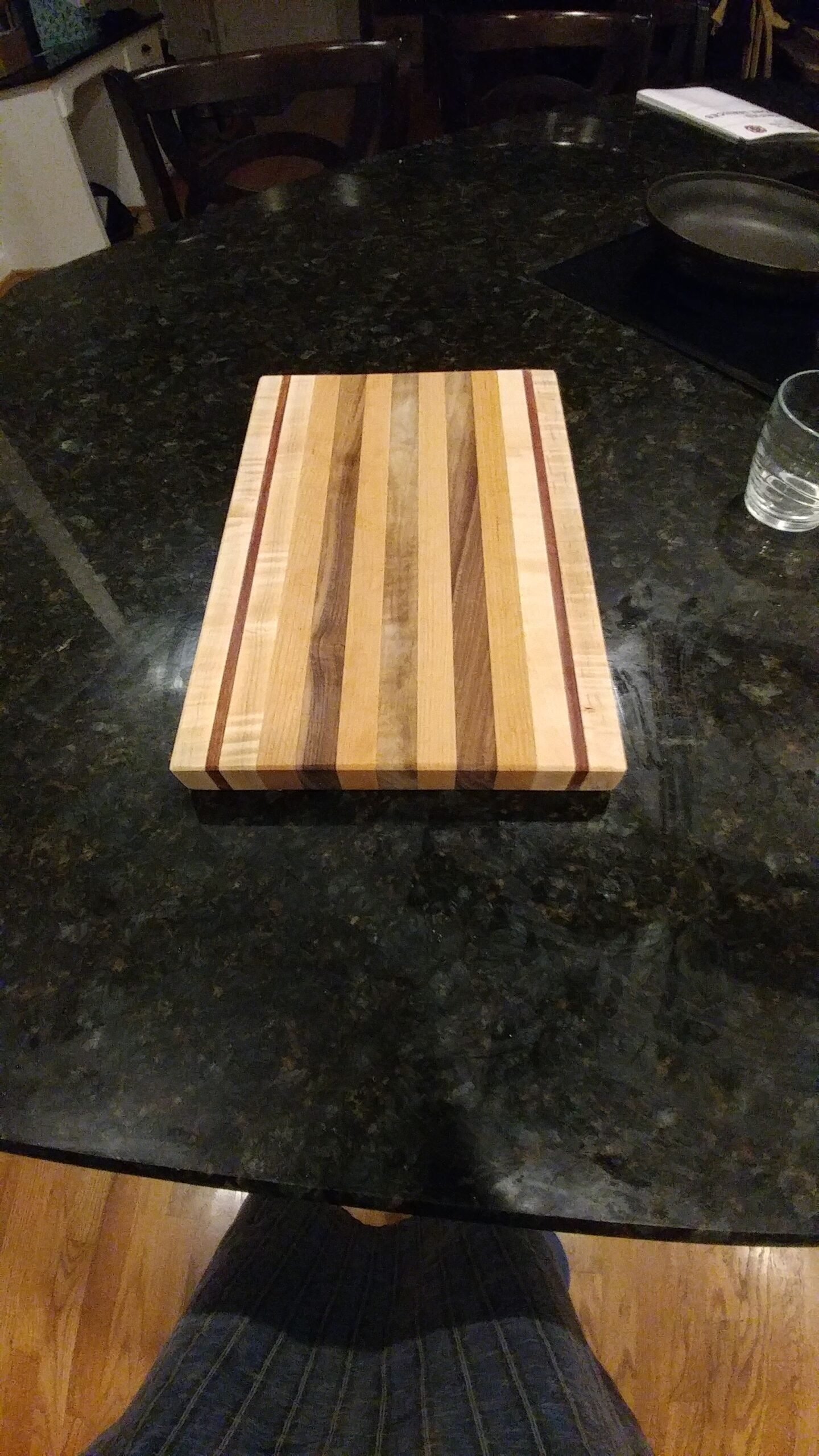
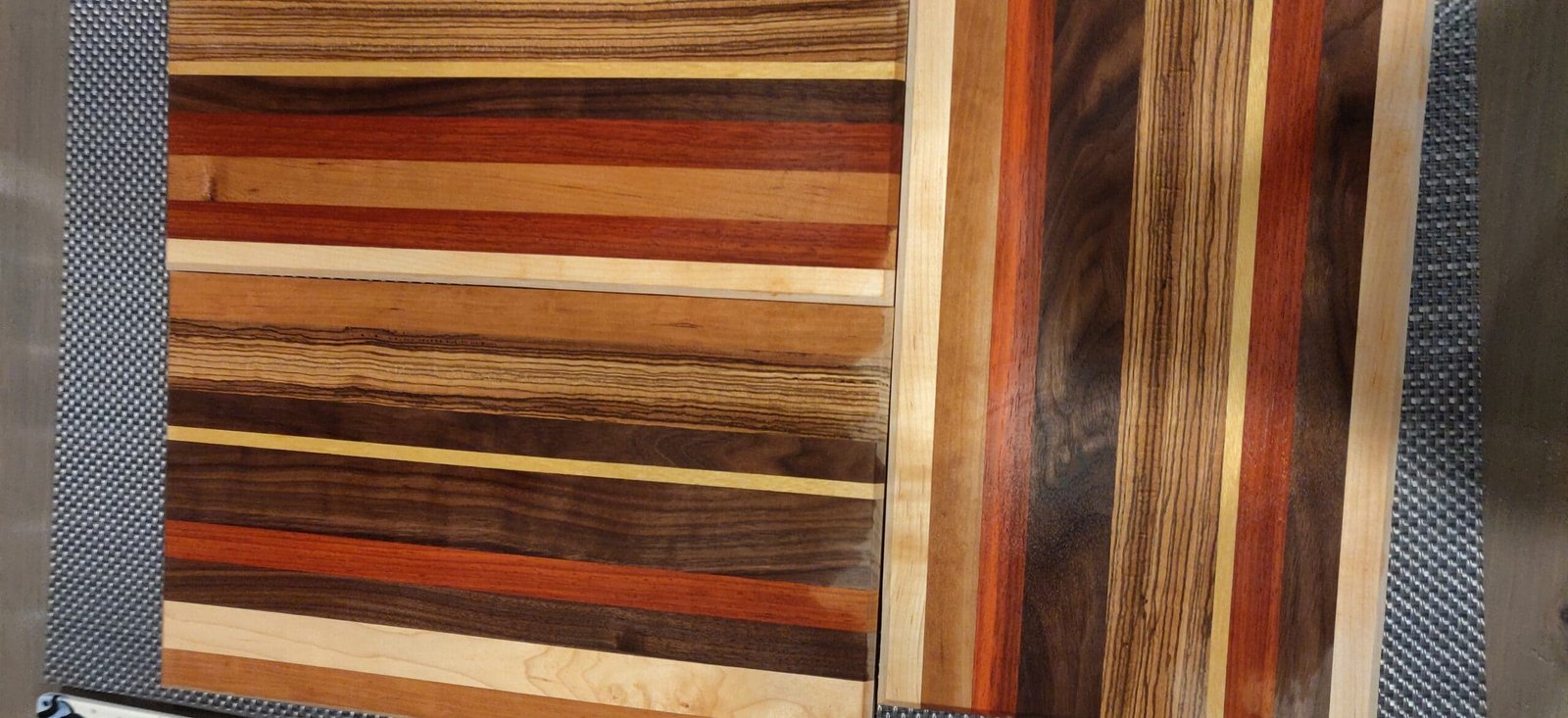
I start with straight-grained lumber, mill it into strips, and glue the strips side by side under even clamping pressure. The long edge of each strip becomes the cutting surface. That is edge grain. The pattern you see on top, a run of stripes, is the strips themselves, which is why mixing walnut, maple and cherry makes such a striking board.
How do edge grain and end grain compare?
End-grain boards are built so the ends of the wood fibers face up. They are known for being gentle on knife edges, and they take more wood and more work, so they cost more and weigh more. Here is how I weigh the choices, with plastic included for reference.
| Feature | Edge-grain wood | End-grain wood | Plastic |
|---|---|---|---|
| Price | Moderate | Higher | Lowest |
| Weight | Substantial, easier to lift and store | Heaviest | Light |
| Knife edges | Gentle | Gentlest | Easy on edges, but the surface scars |
| Upkeep | Hand wash, dry on edge, oil about monthly | Hand wash, and it can drink oil faster, so it needs attention | Dishwasher safe; replace when deeply scarred |
| Repairable | Yes, sand lightly and re-oil | Yes | No |
John Boos, one of the best-known makers, says both constructions are sound for food safety and durability. In other words, this is a choice about feel, weight, price and upkeep, not a safety question.
Is an edge-grain board good enough for daily chopping?
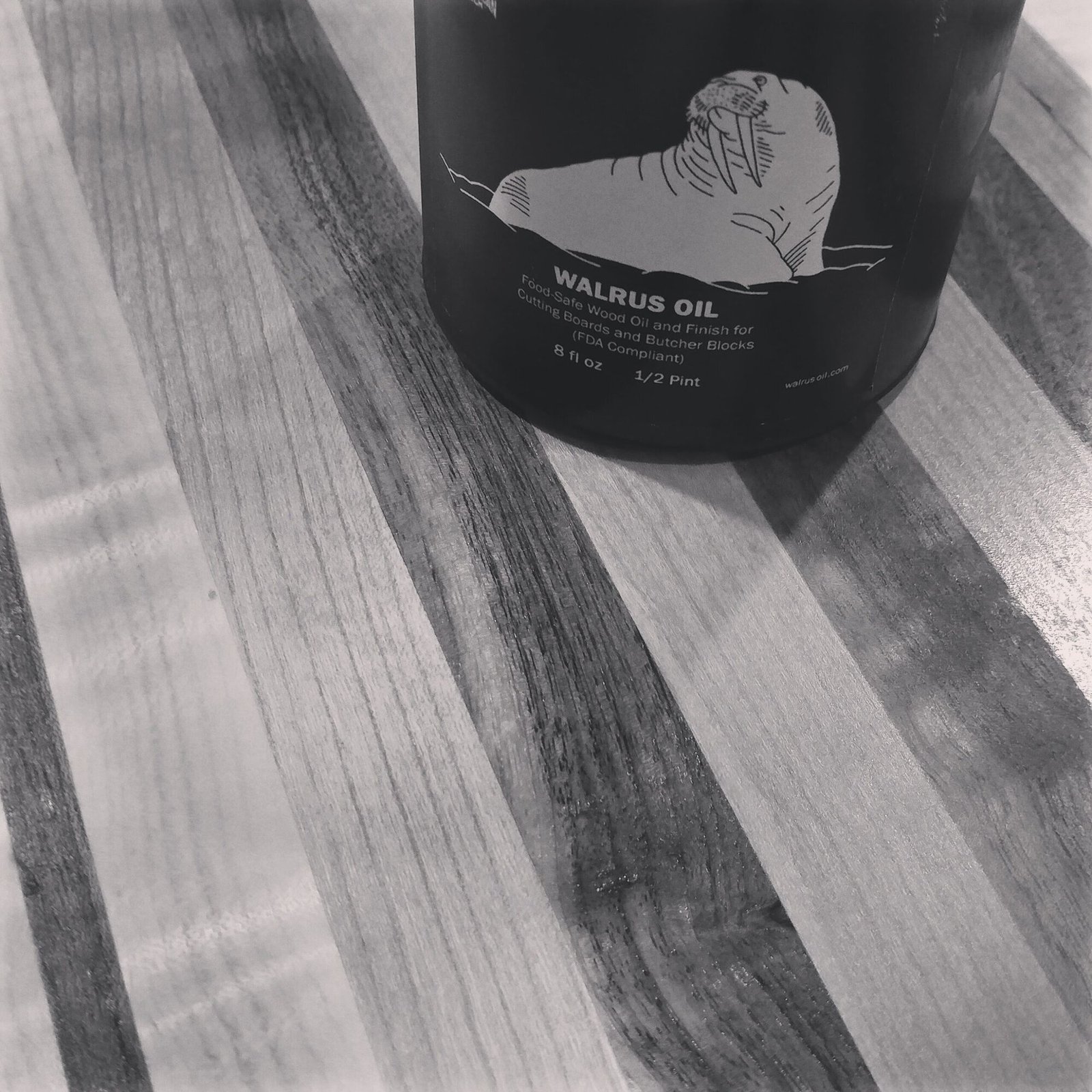
Yes. Walnut, hard maple and cherry are dense hardwoods that stand up to daily cooking, and an edge-grain board stays flat with simple care. I sand each one by hand through progressive grits from 80 up to 220, then finish it with food-grade mineral oil and beeswax board butter. When the surface shows wear after years of use, a light sanding at 220 grit and fresh oil bring it close to new.
Why do I make edge grain?
Three reasons. The board is heavy enough not to slide yet light enough to lift with one hand. The design is simple, with fewer production steps, which keeps prices within reach: my boards start at $50. And the grain does the talking. A straight run of walnut, maple or cherry needs no ornament. If you want a gift or a board for everyday cooking, this is the construction I would put in your kitchen.
Which wood should I pick?
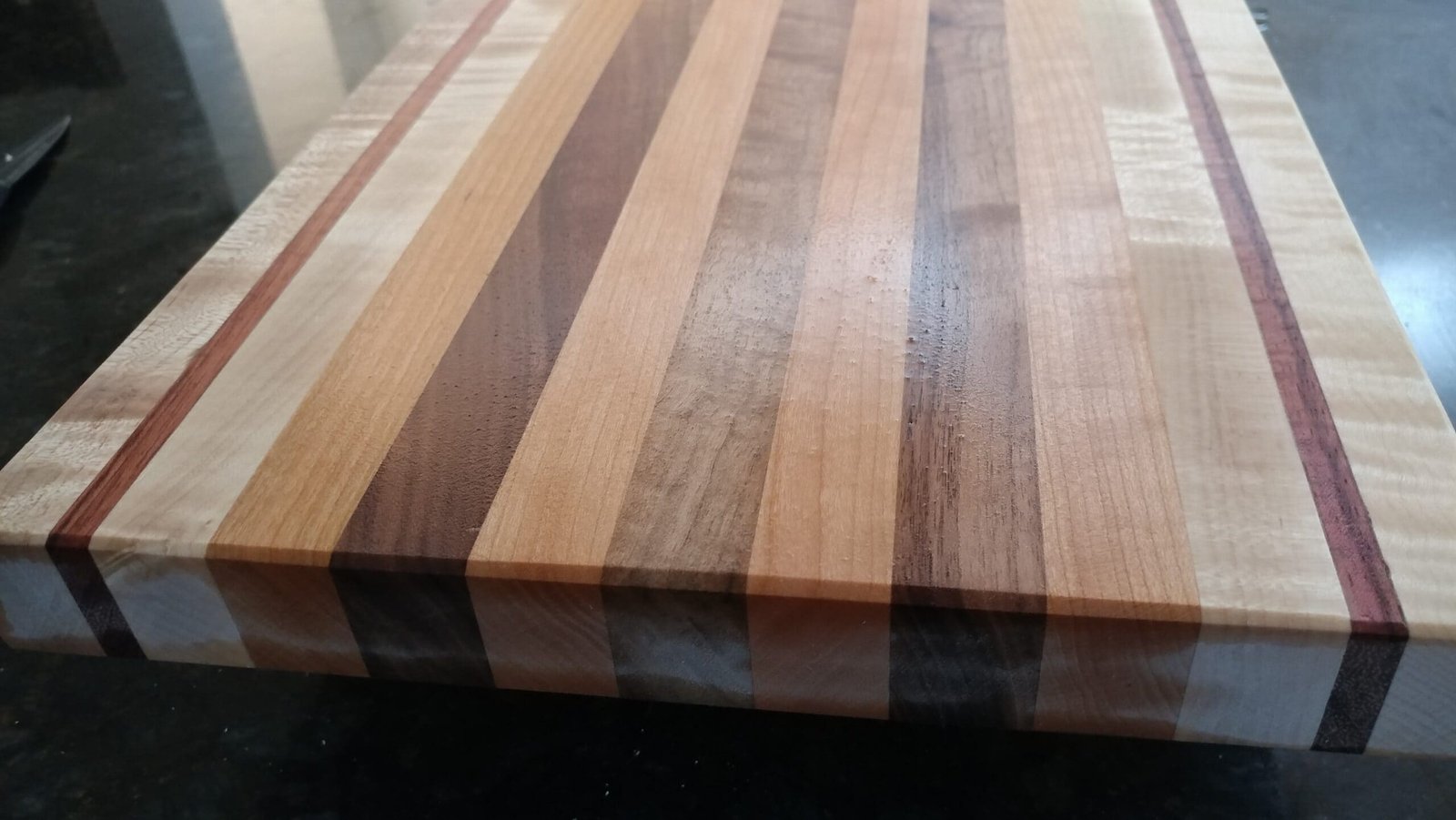
Hard maple is the hardest of the three and suits heavy daily prep. Walnut is rich and easy on knives. Cherry starts pale and deepens to a warm red-brown. I compare them in detail in Walnut vs Maple vs Cherry Cutting Boards: Which Wood Is Best?
How do I keep an edge-grain board flat and healthy?
Wash it by hand with warm water and mild soap, towel-dry it, and stand it on its edge to air-dry. Never soak it or run it through the dishwasher. Oil it whenever water stops beading on the surface, about once a month for most kitchens. The full routine is in my guide to caring for a wood cutting board.
Are wood boards less sanitary than plastic?
Not when they are cleaned and dried properly. A 1994 study by Ak, Cliver and Kaspar comparing used wooden and plastic boards found that clean, well-kept wood is no less sanitary than plastic.
Ready to order an edge-grain board?
Every board is made one at a time in Johns Creek, Georgia, after you approve a quote. Boards start at $50, and you pay nothing until you approve. See sizes and starting prices, read the Cutting Board FAQ, or start a custom order.